

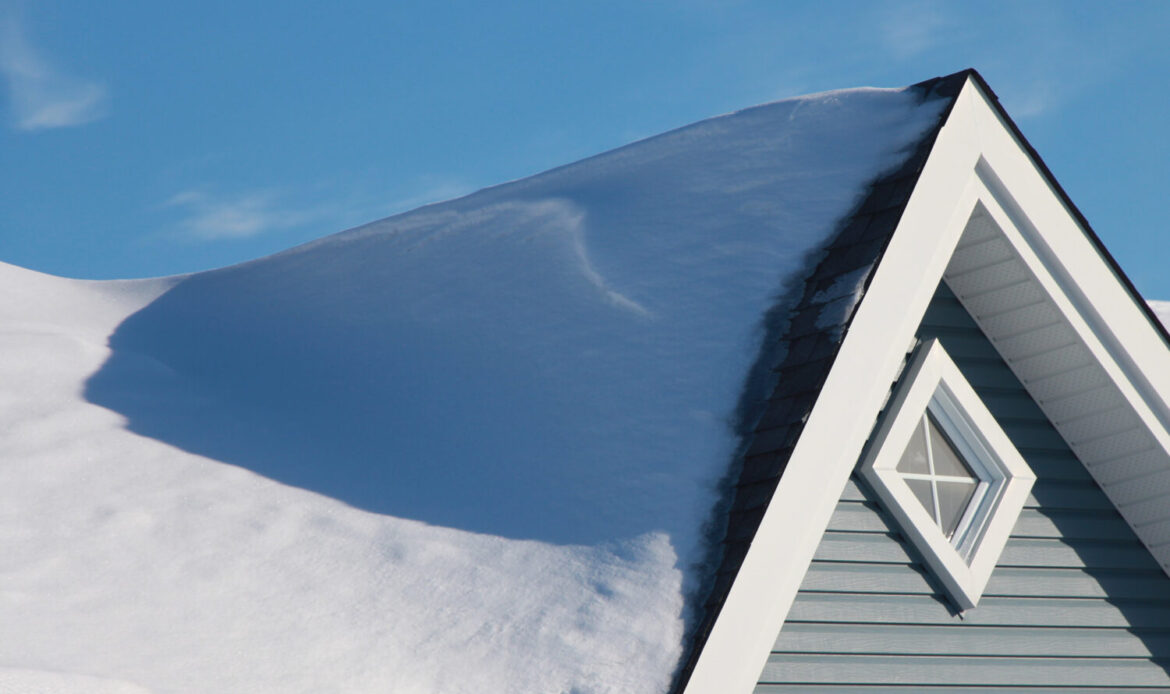
The stain appeared in early May — a faint brown ring on the upstairs bedroom ceiling, about the size of a dinner plate. It had not been there in March. The homeowner, who owned a colonial in Clifton Park, figured it had something to do with the brutal stretch of cold in January when temperatures dropped to single digits for nearly two weeks. He was right about that, but wrong about the scale of the problem. He assumed it would be minor. It was, mostly. But finding out what “mostly” meant required getting on the roof.
He called Elite Contracting in the first week of May. The inspection took about ninety minutes.
What the January Cold Had Left Behind
The roof itself — a 14-year-old architectural shingle installation — was in reasonable condition. No widespread granule loss, no obvious aging across the field. What the inspection turned up was localized: three distinct problem areas, all traceable to the same January cold snap.
The first was near the valley between the main roof plane and a lower dormer. Snow had accumulated there in January and then melted unevenly during a brief warm-up. The meltwater hit the ice dam that had formed at the eave and backed up under two shingles at the low end of the valley. Both shingles had lifted — pulled up by the ice — and the sealant strips that hold them down had lost their grip. No missing shingles, but the bond was broken and the shingles had been acting as a wet sponge against the underlayment every time it rained since.
The second problem was at the chimney. The step flashing and counter-flashing on the low side of the chimney had a gap at the base that had been present before January but was made worse by ice expansion during the freeze. Water had gotten behind the flashing and made its way into the wall cavity. This was likely the source of the ceiling stain — the water had tracked horizontally along a rafter and dripped at a low point in the attic before soaking through the drywall below.
The third finding was a small section of roof decking — roughly two feet by three feet — immediately below those two lifted shingles. It had absorbed water over the winter and was soft to the probe. Not collapsed, not failing structurally, but deteriorated enough that leaving it under new shingles would mean the repair would not hold.
The Scope of the Fix
Addressing winter roof damage in Albany, NY from ice dam activity usually involves a combination of shingle repair, flashing work, and — when there has been prolonged moisture contact — some decking replacement. In this case, the job broke down as follows:
The lifted shingles were re-nailed, the damaged section of decking was cut out and replaced with new OSB, and new shingles were laid over that patch. The chimney flashing was removed, the base re-bedded with roofing cement, new step flashing installed, and the counter-flashing re-secured with fresh sealant. Total time on the roof: about half a day for two crew members.
The gutters adjacent to the problem valley were showing some wear — a few loose hangers, some minor separation at a joint — but were not actively failing. The homeowner was told they were worth watching before next winter but did not need to be addressed immediately. That is a judgment call that comes up often: whether to repair deteriorating-but-functional gutters now or wait until there is an active problem. The inspector noted that the gutter configuration near that valley had contributed to the ice dam formation in the first place, and that correcting the drainage at that location would reduce the risk of the same thing happening again next January.
He scheduled the gutter work for September. The flashing and shingle repairs were done in May.
Why the Ceiling Stain Did Not Mean Interior Remediation
One of the first questions homeowners ask when they see ceiling staining is whether there is mold in the attic or wall cavity. Sometimes there is. In this case, the inspection of the attic space showed no active mold growth — the January leak had dried through the spring, and the drywall stain was residual mineral deposit from the dried water, not an indication of ongoing moisture. Once the flashing was repaired and the decking replaced, there was no reason to open the ceiling.
This outcome depends on how quickly the leak source is addressed. A leak that is ignored through spring and summer in a warm attic space creates the conditions for mold that a leak fixed in May does not. The homeowner was fortunate that the stain appeared when it did — early enough in the year that the moisture had not had a full summer to incubate.
There is a useful breakdown of spring roof inspection and flashing repair in Albany that walks through what a standard post-winter inspection covers and what typical findings look like in the Capital Region.
What the Repair Cost
The total for the May repairs — decking replacement, shingle patch, chimney flashing reinstallation — came to $1,380. The gutter work scheduled for fall was quoted separately at about $420 for hanger replacement and joint resealing on the affected section.
For reference, winter roof damage in Albany, NY tends to cluster in three cost ranges: minor repairs (shingle re-sealing, small flashing adjustments) that run $300 to $600; moderate repairs involving some decking replacement or full flashing reinstallation that run $800 to $1,800; and significant repairs where multiple sections of the roof have been compromised that can reach $3,000 to $5,000 or more before a full replacement makes more sense than continued patching.
The Clifton Park job fell in the middle of the moderate range. The homeowner was told the rest of the roof had meaningful life remaining — likely another eight to ten years barring another event like January’s — and that the repairs made sense rather than accelerating a replacement. That assessment was based on the overall shingle condition and decking integrity across the rest of the roof, which the inspection confirmed was sound.
For more on how chimney flashing failures connect to interior leaks, the post on chimney flashing and roof leaks in Albany covers the mechanics in detail — what the failure looks like from inside versus outside, and what a proper reinstallation involves.
If you have ceiling staining or other signs of a winter roof issue, Elite Contracting’s roof repair services cover inspections and repairs across the Albany and Clifton Park area.
More on Residential Roofing from Elite Contracting
The full decision walkthrough is in our pillar guide: The Roof Over Your Head — A Homeowner’s Working Guide.
For service overview, project timelines, and free estimate scheduling, visit our Residential Roofing service page.