

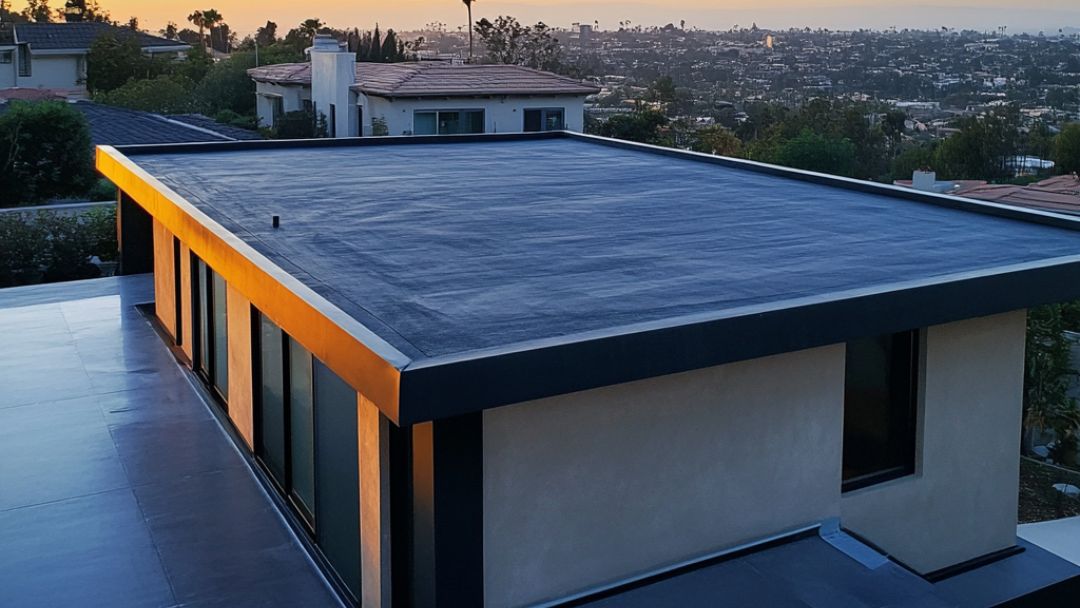
When you manage a commercial property in Upstate NY, your flat roof is more than a line on a balance sheet—it’s the umbrella protecting your operations, tenants, and inventory from our region’s notorious weather. Drainage is the make-or-break detail that often gets overlooked until ponding water, leaks, or icy hazards appear. In a climate where freeze-thaw cycles and heavy snow are routine, getting drainage right isn’t optional—it’s essential to safety, longevity, and predictable costs.
As you weigh your options—repair, retrofit, or replacement—you’ll want a contractor who understands local climate realities, commercial code requirements, and the best practices for flat roof drainage design. Partnering with Elite Contracting helps ensure you get a roof solution tailored to Upstate NY, not a one-size-fits-all approach. And if you’re already searching for a roofer company near me, you’re asking the right question at the right time—before the next weather system hits.
What causes drainage issues in commercial flat roofs?
Flat roofs aren’t truly flat. They rely on subtle slopes, drains, scuppers, and gutters to move water off the membrane quickly. When one component is undersized, poorly installed, clogged, or simply past its service life, water lingers—and that’s when problems start. Here are the primary causes:
1) Design and installation errors
- Insufficient slope: Minimal pitch (often 1/8–1/4 inch per foot) is required to move water; anything less invites ponding.
- Too few drains or scuppers: Inadequate drainage points create bottlenecks and standing water after storms.
- Poorly placed drains: Low points not aligned with drains allow depressions and ponding zones.
- Improperly sized gutters/downspouts: Undersized or long runs can overwhelm capacity during heavy rain or fast snowmelt.
2) Aging materials and deferred maintenance
- Membrane settlement and sagging: Over time, insulation compresses and decks deflect, forming ponds.
- Clogged drains and scuppers: Leaves, twigs, granules, and debris obstruct water flow.
- Deteriorated sealants and flashing: Cracks allow water to move laterally and reappear far from the source.
3) Roof traffic and equipment
- Crushed insulation around rooftop units and walk paths: Creates depressions that hold water.
- Improper curb flashing and pitch pans: Weak points where water collects and infiltrates.
4) Structural and substrate challenges
- Deck deflection: Snow load and age can permanently lower areas around joists or spans.
- Tapered insulation misalignment: Even small errors leave water stranded.
Why are drainage issues worse in Upstate NY’s climate?

Upstate NY’s weather magnifies small drainage flaws into big problems.
- Freeze-thaw cycles: Water that ponds at day and freezes at night pries apart seams, flashing, and fasteners.
- Heavy snow and rapid thaws: Lake-effect and nor’easter systems can dump feet of snow, followed by sudden warm-ups that overwhelm drains with runoff.
- Wind-driven rain: Horizontal rain finds weak flashing and counterflashing points.
- Leaf and pollen loads: Seasonal debris clogs strainers, scuppers, and gutters.
Seasonal pressure points on your roof vary. Use the table below to plan inspections and preventive maintenance:
| Season | Primary Drainage Stress | Suggested Actions |
|---|---|---|
| Late Fall | Leaf debris, early freeze-thaw | Clean drains/scuppers; inspect strainers; clear gutters |
| Winter | Snow load, ice dams, freeze expansion | Monitor load, check overflows, verify heat cables (if used) |
| Early Spring | Rapid snowmelt, heavy rain | Check for ponding, inspect seams/flashing, verify positive drainage |
| Summer | UV degradation, thermal movement | Repair membrane blisters, reseal penetrations, clear windblown debris |
What are the risks of ignoring poor roof drainage?
Poor drainage is a compounding risk—what starts as a nuisance turns into structural, safety, and financial exposure.
- Membrane failure: Constant immersion accelerates blistering, seam failure, and UV breakdown.
- Structural damage: Water intrusion leads to rusted decks, rotted wood nailers, and compromised insulation.
- Mold and indoor air quality issues: Moisture in the assembly or interior creates microbial growth and occupant complaints.
- Icy buildup and slip hazards: Overflowing gutters refreeze on walkways and loading docks.
- Increased snow load risk: Ponding areas become ice pans; added weight stresses framing and reduces safety margins.
- Energy penalties: Wet insulation loses R-value, driving up heating and cooling costs.
- Unplanned downtime: Leaks disrupt tenants, manufacturing lines, and data rooms.
How do you tell if your flat roof has drainage problems?
Visual cues from the roof surface
- Persistent ponding: Water remains 48 hours after rainfall.
- Dirty rings or silt lines: Indicate historical water levels.
- Membrane alligatoring and blisters: Common in areas that stay wet.
- Vegetation growth: Moss or grass sprouting in low spots is a red flag.
- Overflow streaking: Stains below scuppers or on walls suggest frequent overflow.
Interior signs
- Ceiling stains or damp tiles near perimeter walls or around penetrations.
- Musty odors after rain or thaws.
- Inconsistent temperatures: Wet insulation causing hot/cold spots.
Inspection tips for maintenance teams
- Document low spots with photos after storms; mark pond boundaries with chalk to track movement.
- Lift strainers and check for debris down in the drain body and leader line, not just at the surface.
- Run water tests: Hose off suspect areas to see if water moves to a drain or stalls.
- Check all overflows: If an overflow scupper is damp or stained, your primary drainage is underperforming.
- Record moisture readings: Use a handheld meter on ceilings beneath known ponding zones.
What types of drainage systems exist for flat roofs?
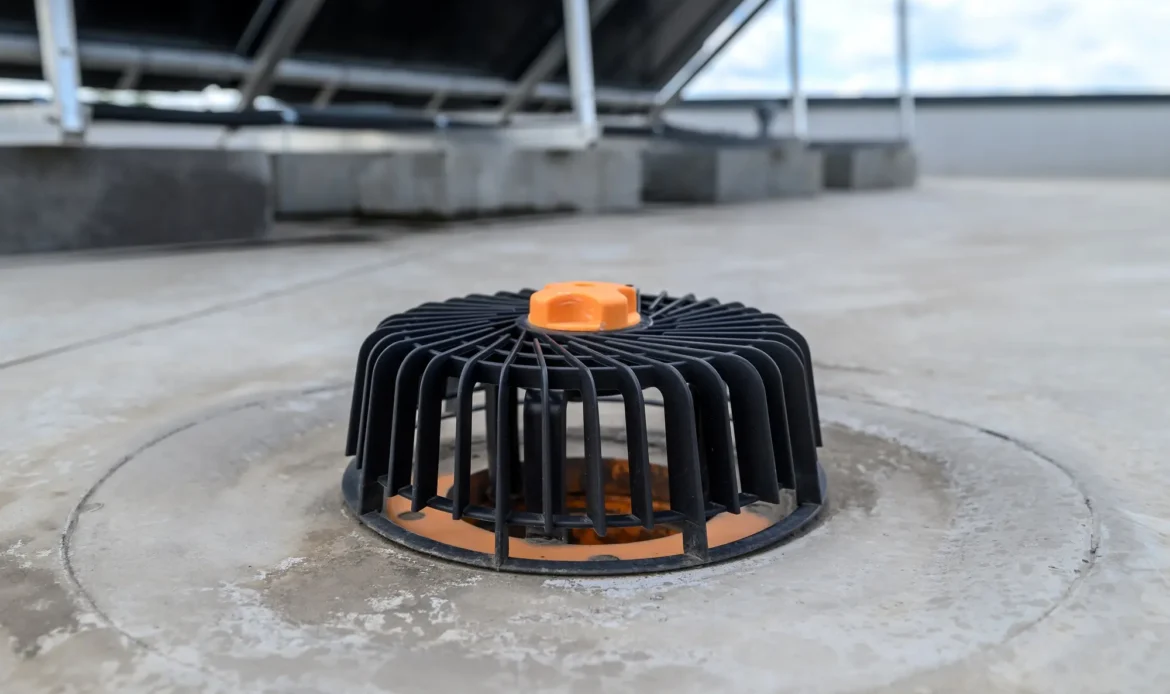
Choosing the right system depends on roof size, building design, budget, and climate. Here’s a quick comparison:
| Drainage Type | How It Works | Pros | Cons | Best Use |
|---|---|---|---|---|
| Internal (Primary) Drains | Drains tie into interior piping; water exits through down leaders inside the building. | Clean exterior lines; less risk of icing on facades; scalable for large roofs. | Clogs can be hidden; requires regular cleaning; plumbing access may be needed. | Large commercial roofs with parapets and high overflow requirements. |
| Overflow Drains/Scuppers | Secondary path for water when primaries are overwhelmed or clogged. | Critical life-safety feature; provides visible warning of issues. | Can stain walls; may create icy discharge areas if not managed. | Any roof with internal drains; often code-required. |
| Scuppers + Conductor Heads | Openings through parapets discharge to collector boxes and downspouts. | Simple and serviceable; easy visual inspection. | Exposed to icing; can overflow onto walkways if poorly placed. | Mid-size roofs with parapets; where interior plumbing is limited. |
| Gutters & Downspouts | Edge collection system channels water to grade. | Cost-effective; straightforward maintenance. | Prone to icing and wind damage; capacity limits in heavy storms. | Low-slope roofs without parapets; smaller commercial buildings. |
| Siphonic Systems | Special piping creates full-bore flow to move large volumes quickly. | High capacity; fewer roof penetrations; good for big footprints. | Higher design complexity; requires specialized maintenance. | Large facilities, warehouses, and distribution centers. |
| Tapered Insulation & Crickets | Insulation boards create slope to drains and around curbs. | Permanent slope solution; improves energy performance. | Added material height; cost and logistics on retrofits. | New roofs; re-roofs where chronic ponding exists. |
How to choose for your building
- Footprint and parapets determine whether internal drains or edge systems make sense.
- Budget and timeline may favor incremental improvements (e.g., added drains, tapered patches) versus full-system re-slope.
- Snow and ice exposure argue for protected internal drain lines and reliable overflows.
What is the cost of fixing drainage systems?
Costs vary with scope, access, and existing conditions, but you can frame your budget around typical approaches:
- Drain cleaning and minor repairs: Clearing lines, replacing strainers, re-sealing flashings. Typical modest service ticket, often scheduled seasonally.
- Add or upsize drains/scuppers: Includes core cuts, tie-in to membrane, possible plumbing. Pricing depends on deck type and accessibility.
- Tapered insulation overlays: Installed to correct ponding in targeted areas; cost depends on thickness, area, and membrane work.
- Gutter and downspout upgrades: Heavier-gauge metals, larger leaders, additional heat cables where appropriate.
- Full re-slope re-roof: Highest cost but often the long-term fix, especially for widespread deflection or aging assemblies.
For broader budgeting context—crew size, materials, permit considerations, and regional price norms—see this helpful guide: Roofing Contractors Albany NY: Cost Guide. Use it to align your drainage plan with your capital budget and to map out phased work if needed.
Sample budgeting scenarios
- Seasonal maintenance program: Two comprehensive cleanings per year, plus on-call service after major storms—budget-friendly risk reduction.
- Targeted ponding correction: Install one or two additional drains and tapered crickets around rooftop units—moderate investment, big impact.
- Major retrofit: Re-slope with tapered insulation across a large section, new primaries and overflows—higher upfront cost, long-term performance.
Pro tip: Prioritize areas with documented leaks, repeated ponding, or interior damage. Often, 20% of the roof causes 80% of the issues—invest there first to stabilize risk.
Are drainage repairs covered by insurance?
Insurance typically covers sudden, accidental damage (like storm impacts), not deterioration from deferred maintenance. However, drainage-related claims can be nuanced:
- If a severe storm overwhelms an otherwise well-maintained system and causes damage, portions may be covered.
- If investigation reveals long-standing neglect (clogged drains, failed flashing), coverage may be limited or denied.
- Documentation—photos, maintenance logs, and professional inspection reports—often makes the difference.
For a practical walk-through of what to expect and how to prepare, check out Roof Insurance Claims Simplified. It outlines how to document conditions, communicate with adjusters, and align repairs with policy language.
When should you call a professional?
- After any event that leaves standing water for more than 48 hours.
- When you see stained ceiling tiles, bubbling paint, or damp odors indoors.
- If drains or scuppers repeatedly clog despite routine cleaning.
- When snowmelt creates icicles or ice sheets on sidewalks or loading docks.
- Before capital planning: a pre-season condition assessment helps you budget accurately.
Not sure where to start? Contact a trusted roofer company near me to perform a drainage audit with photos, elevation mapping, and prioritized recommendations.
How to choose the right contractor
- Local flat-roof experience: Ask for references from Upstate NY facilities similar in size and use.
- Drainage design capability: Look for experience with tapered insulation layouts, internal drain tie-ins, and overflow sizing.
- Maintenance mindset: The best partner pairs repair skill with preventive programs.
- Detailed reporting: Insist on photo logs, marked-up roof plans, and clear scopes with material specifications.
- Safety and scheduling: Verify safety protocols and the ability to work around business operations.
Pro tip: Include drain count, sizes, and locations in your roof documentation. A thorough roofer company near me will update these details during each inspection, helping you spot trends year over year.
What steps can be taken right now to prevent future drainage issues?
Here’s a simple, action-first prevention plan you can deploy immediately.
Quick wins (this week)
- Clear debris from all drains, strainers, scuppers, and gutters.
- Photograph and flag ponding zones; mark edges with removable chalk for future comparison.
- Check that every drain has a properly fitting strainer.
- Walk the perimeter: look for overflow staining and cracked sealant at coping joints.
- Log findings: date, conditions, photos, and any temporary fixes.
Before winter and before spring thaws
- Schedule a pre-season roof inspection and cleaning with a qualified crew.
- Verify overflow paths are unobstructed and properly sized.
- Evaluate heat cable needs at gutters/downspouts to reduce ice hazards.
- Confirm rooftop equipment curbs have crickets to divert water to drains.
Medium-term improvements
- Add drains or scuppers at chronic low spots.
- Install tapered crickets around large rooftop units and between long drain runs.
- Upsize gutters/downspouts or add conductor heads to handle peak flows.
- Replace brittle sealants and repair membrane blisters in ponding areas.
Long-term plan
- Incorporate drainage upgrades into your capital plan alongside membrane lifecycle.
- Adopt a semi-annual maintenance program with documented inspections.
- Keep a roof history file: drawings, core samples, drain maps, warranties, and service reports.
Need help prioritizing? Book a seasonal assessment with a reputable roofer company near me to translate roof conditions into a phased, budget-aligned plan.
Putting it all together: A simple decision flow
Use this step-by-step logic to decide your next move:
- Do you have ponding over 48 hours after rain? If yes, document with photos.
- Are drains/scuppers clear? If no, clean and retest after the next rain.
- Does ponding persist after cleaning? If yes, evaluate slope and consider added drains/tapered insulation.
- Any interior leaks or structural staining? If yes, prioritize leak investigation and immediate repairs.
- Is the issue widespread (multiple areas) or localized? Widespread issues often point to re-slope or partial re-roof planning.
- Review budget and timing: Can you phase work? Address high-risk zones first, then plan capital improvements.
Conclusion: Protect your building, budget, and peace of mind
In Upstate NY, flat roof drainage is a frontline defense against leaks, structural damage, and costly downtime. Addressing the root causes—slope, capacity, maintenance, and climate stresses—pays off in fewer emergencies, safer sites, and longer roof life. Whether you need a seasonal cleaning, targeted ponding fix, or a full drainage redesign, the right partner will turn your roof from a liability into a durable asset.
Ready to assess your roof and build a smart, phased plan? Schedule a consultation with Elite Contracting and get solutions tailored to the Capital Region’s weather and your building’s needs.
More on Flat Roofing from Elite Contracting
The full decision walkthrough is in our pillar guide: The Flat Roof Playbook.
For service overview, project timelines, and free estimate scheduling, visit our Flat Roofing service page.