

The situations described here are composites drawn from the types of jobs and decisions we encounter regularly. Names and specific figures are illustrative.
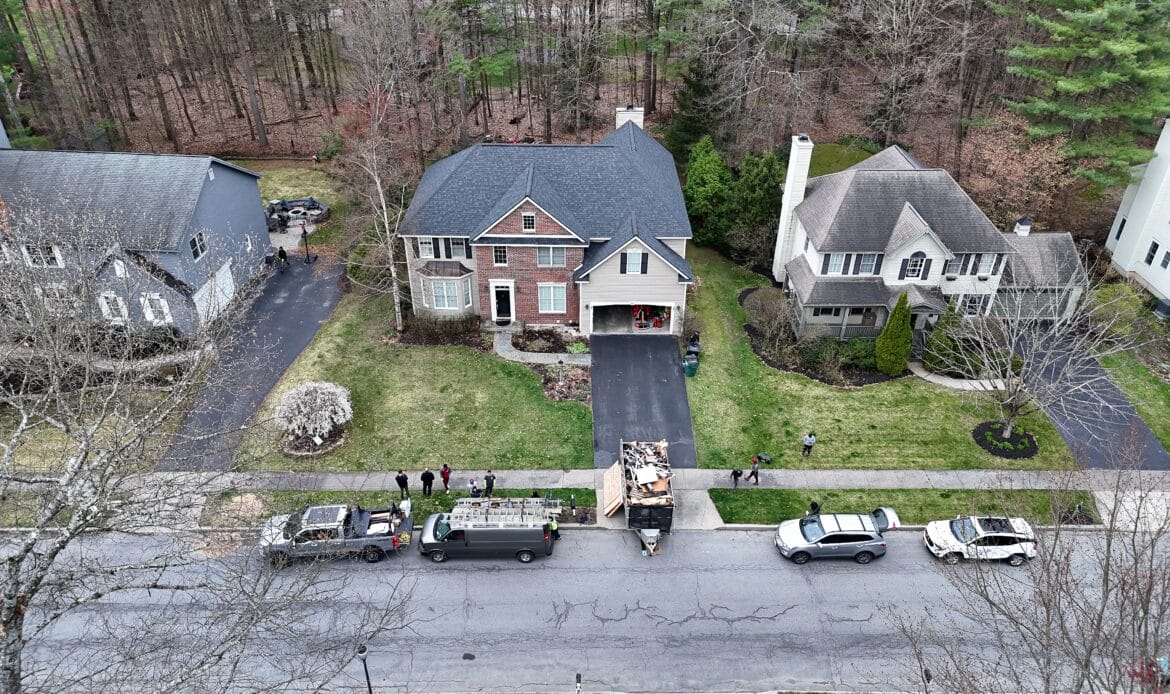
A homeowner on the Schenectady side of Balltown Road had a two-story colonial with a 24-year-old asphalt shingle roof. One slope over the garage had lost granules, and a small leak at the back bathroom vent had been patched twice. In late October the decision was not whether to replace the roof but when, and how much to pay now. One contractor quoted $14,200 for a full tear-off and asked for $7,100, half the price, at signing to hold an April start. That is the kind of offer a lot of people weighing a roof replacement in Schenectady, NY run into this time of year, and the number that mattered most in this case was not the price. It was where that $7,100 would sit for five months.
Why the roof could wait until April
The roof was worn but not failing. The decking felt solid when walked, the leak had stopped after the second boot repair, and the attic showed no fresh staining. With crews booked into November and the homeowner wanting to choose a shingle color in daylight, waiting for spring was a reasonable call. A small repair would carry it through the winter, and a full replacement could go on once the weather settled.
That part of the decision was ordinary. What made it harder was the booking pressure. Fall is when many Capital Region roofers fill their spring calendars, and some ask for a large deposit to put a name on a date. The homeowner had two written offers on the table and a third visit scheduled. Before signing anything, they asked a plain question: if half the money goes out in October and the work starts in April, what protects that money in between?
What New York says about money paid before the job is done
New York treats roofing as a home improvement. The state definition lists roofing, siding, windows and insulation by name, and the home improvement contract rules apply once the contract price is over $500[3]. A full roof replacement clears that bar many times over.
Under the Lien Law, payments a homeowner makes to a home improvement contractor before the work is substantially complete must be deposited within five business days into an escrow account at a bank located in New York. That money stays the property of the homeowner until it is properly applied to the job[1]. The contractor can skip the escrow account only by giving the homeowner a bond, a contract of indemnity or an irrevocable letter of credit guaranteeing the return or proper use of the payment, and that has to be delivered within ten business days[1]. If the contract does not name the bank, the contractor has to tell the homeowner in writing where the funds were placed within ten business days of the deposit[1].
The contract itself has to say this. General Business Law section 771 requires a signed, written contract with the approximate start and completion dates, a description of the work and materials including make or model, the price, a notice about the escrow requirement, and a schedule for any progress payments[2]. It also requires that progress payments “bear a reasonable relationship” to the work performed, materials purchased or expenses the contractor would owe at that point[2].
Here is how the timeline looked once the homeowner wrote it down:
| What happens | Deadline under NY law | Source |
|---|---|---|
| Homeowner may cancel the signed contract in writing | Until midnight of the third business day after signing | GBL 771[2] |
| Contractor deposits pre-completion payments into a NY escrow account | Within five business days of receiving the payment | Lien Law 71-a[1] |
| Contractor tells you where the money is (if the contract does not name the bank) | Within ten business days of the deposit | Lien Law 71-a[1] |
| Bond, indemnity contract or letter of credit delivered instead of escrow | Within ten business days of the payment | Lien Law 71-a[1] |
How the two payment offers lined up
Both written quotes were for the same scope: tear off to the deck, replace damaged sheathing as needed, new underlayment and ice barrier at the eaves, new flashing and pipe boots, and architectural shingles. The prices were within a few hundred dollars of each other. The difference was entirely in how the money moved.
| Payment step | Offer A ($14,200) | Offer B ($14,450) |
|---|---|---|
| At signing in October | $7,100 (50%) to hold an April date | $1,000 to hold an April date |
| When materials are delivered | Nothing further | $6,500 |
| At substantial completion | $7,100 | $6,950 |
| Escrow notice in the contract | Not included | Included, with bank named |
Offer A asked for half the money six months before any shingles arrived. Nothing would be bought, delivered or installed for that payment until spring. Under the “reasonable relationship” language, a progress payment is supposed to line up with work done, materials bought or expenses the contractor is on the hook for at that point[2]. A deposit that large with no materials ordered is hard to square with that. Offer B kept the October payment small and tied the large payment to the day the bundles showed up in the driveway, which is the kind of schedule the state consumer guidance describes: payments tied to stages of the job, with the final payment held until the work is done[4].
Offer A also left out the escrow notice. That does not by itself mean a contractor is dishonest, but the notice is a required part of a New York home improvement contract[2], and its absence told the homeowner the paperwork had not been written with state rules in mind.
The question that settled it
The homeowner called the first contractor back and asked two things: which bank the $7,100 would be deposited in, and whether the contract could be rewritten with the escrow notice and a smaller deposit. The answer was that the deposit was needed “to lock in material pricing” and that it went into the operating account. No bank was named and no bond was offered.
“In New York, the money you pay before the roof is substantially done is supposed to go into an escrow account within five business days, or the contractor gives you a bond instead. If the contract doesn’t say where your deposit is going to sit, ask before you sign.”[1]
Paul Sandul, Owner, Elite Contracting
The homeowner signed Offer B in early November. It cost $250 more. The $1,000 deposit went into an escrow account at a bank named in the contract, and the materials payment was set for delivery day. If the homeowner had changed their mind within three business days, written notice would have been enough to cancel[2][4]. A roofer came out once in December to check the repaired boot after the first heavy snow, and the replacement went on in the third week of April. For anyone who wants to see how a quote should break out line by line, the post on why three Albany roof quotes came in almost $6,000 apart walks through that side of it.
What homeowners usually ask at this point
The first question is usually whether a big deposit is a sign of a scam. Not always. Some contractors simply run their business that way. The state consumer guidance is direct about it, though: never pay the full price up front, set a payment schedule tied to stages of the work, and hold the final payment until a walkthrough[4]. The older state Consumer Protection Board booklet puts it more plainly: do not pay a large down payment before work begins, and negotiate advance payments tied to completion of specific work[5].
The second question is what else belongs in the contract. Since 2022, New York contracts also have to disclose the contractor’s property or casualty insurance that covers the work, with the insurer’s contact information[2]. The Consumer Protection Board booklet also suggests getting a lien release at the end of the job so suppliers and subcontractors cannot come after the homeowner for money the contractor owed them[5]. And the state recommends getting at least three written estimates that list materials, services and the timeline[4].
The third question is whether waiting until spring makes sense at all. It depends on the roof. A worn roof with sound decking and one repaired leak can usually go one more winter with a targeted roof repair. A roof with soft decking, active leaks in more than one spot, or ice dam history over the eaves is a different conversation, and putting it off can turn a replacement into a replacement plus interior repairs. Our roof replacement page explains what a full tear-off includes, and the post on why we only do full tear-offs covers why going down to the deck matters.
Where spending more up front stopped making sense
Locking in a price can be worth something. Material prices move, and a contractor who orders shingles early and stores them is carrying a real cost. In that case a larger payment tied to a delivery or a documented material purchase is easier to understand. What did not make sense here was paying half the price in October for a crew date in April with no materials bought, no bank named and no bond. The extra $250 on Offer B was the cheaper risk.
It also helped that the homeowner was not in a hurry. People who are rushing because of an active leak or an insurance deadline have less room to push back on terms. For a planned spring job, there is time to read the contract, ask where the deposit goes, and walk away from paperwork that leaves out what the law requires. For homeowners comparing contractors for a spring residential roofing project, the same questions apply whether the house is in Schenectady, Niskayuna or Rotterdam.
What the homeowner took from it
The roof itself was a routine replacement. The useful part of the story was the five months between signing and starting. A deposit is not a bad thing, and the size that is reasonable depends on what the contractor is actually spending at that point. New York already spells out where pre-completion money is supposed to go and what the contract has to say about it, and a homeowner can ask about both without being difficult. Anyone planning a roof replacement in Schenectady, NY this winter or next spring can use the same two questions: where will my deposit sit, and what is each payment tied to.
If you are looking for a written roof quote with a clear payment schedule, you can reach out here.
Sources
- New York Lien Law Section 71-a: Further trust of funds (subdivision 4, home improvement contracts), New York State Senate, Open Legislation
- New York General Business Law Section 771: Contract provisions (home improvement contracts), New York State Senate, Open Legislation
- New York General Business Law Section 770: Definitions (home improvement, home improvement contract), New York State Senate, Open Legislation
- Consumer Alert: Division of Consumer Protection Releases Guide with Tips to Help Homeowners Avoid Home Improvement Scams, New York Department of State, 2023
- Home Improvements Without Headaches: Tips and Tools for Home Improvements, NYS Consumer Protection Board, distributed by Cornell Cooperative Extension