

The situations described here are composites drawn from the types of jobs and decisions we encounter regularly. Names and specific figures are illustrative.
Late September in the Capital Region has a specific rhythm. The first cold front pushes through with wind before the leaves are fully down. Homeowners walk out to the driveway on Sunday morning and find a small pile of asphalt granules under the downspout that were not there Friday. Most of them do not think anything of it. A Clifton Park homeowner called us anyway. He wanted a roof inspection in Albany, NY before winter and figured a Sunday granule pile was as good a reason as any.
The house was a 2004 Clifton Park colonial, architectural shingles, dimensional, one previous re-roof around 2015 after a hail claim. He had never had a full inspection since. The plan for the call was to walk the roof, check the flashing details, look at the underside of the deck from the attic, and give him a written punch list ranked by urgency. Nothing fancy. Just an honest look before the ridge fills with snow in December.
Where the September call usually starts
Most fall inspection calls we get in the Clifton Park and Halfmoon corridor come from one of three triggers. A wind event that dropped a few shingles or lifted a ridge cap. A homeowner who noticed a dark stain in an upstairs ceiling that never quite went away over the summer. Or a real estate agent who told them the buyer’s inspector was going to look at the roof twice, so they might as well know what it says first.
This one was the wind trigger, which is the easiest one to work with. The homeowner had a clear reason to look, no active leak, no urgency about a listing. That gave us room to do a full inspection instead of a quick patch. And it turned out to be the right time to do one, because his roof had picked up two issues over the summer that had not existed the last time we had seen the house.
What the roof actually showed
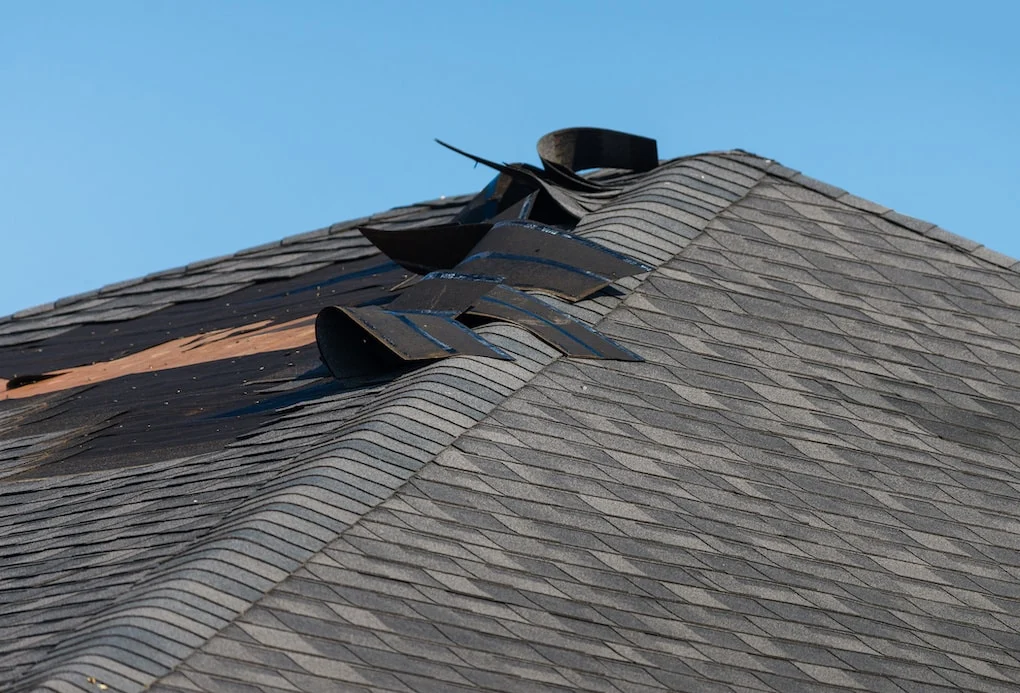
The ridge cap on the south-facing side had a three-foot section that had lifted. Not blown off — the shingles were still there, but the sealant strip on the top row of the ridge cap had broken loose. Wind from the southeast had been catching under it every gust for the past two months. Left alone through the winter, the first heavy wet snow would either finish tearing the strip loose or drive water under the ridge shingles and directly onto the ridge vent felt underneath. That leak would show up in his kitchen ceiling in February, not October.
The chimney flashing was the second finding. Not a leak yet, but a step-flashing joint on the back side where the counter-flashing had pulled slightly away from the chimney mortar. On a clean summer day it was fine. Under an ice dam, water would work into that quarter-inch gap and run down the flashing into the roof deck. That was the classic pattern for the kind of chimney leak that shows up as a stain on an upstairs closet ceiling in late January — always a mystery to the homeowner because the roof looks fine from the ground.
The third finding was a pipe boot with cracked EPDM around the vent stack. Not leaking. But EPDM at that stage of life — visible cracks, hardening around the flange — is a two-year problem, not a five-year problem. Sometime between now and 2028 the boot would leak. Cheap fix now, moderate fix later, expensive fix if the ceiling below it happened to be the one over his home office.
The decision point on scope
Three items on the list. He asked the honest question at that point — did he need to do all three now, or could he stage them? The right answer, and this is what we tell most fall-inspection clients, is that ridge cap items and flashing items are always this-year jobs if freeze is coming. Pipe boots that have not started leaking yet can wait for spring or fall of the following year.
The reason is not opinion. Ridge caps and chimney flashing fail under ice damming or heavy snow, not under warm-weather rain. Water sitting on top of a lifted ridge cap under six inches of packed snow forces itself into the seam every time the sun warms the roof surface briefly at midday. A pipe boot fails when the sun bakes the rubber, which happens in summer. Winter does not accelerate a boot’s decline the way it accelerates a lifted cap’s.
He chose to do ridge cap and chimney flashing in October. Pipe boot deferred to spring. Total cost for the two immediate items landed around $675 — one visit, one crew, half a day of work. If we had come out in January when the ridge cap actually started leaking into his kitchen, the same fix would have been $1,400 to $1,800 because the surrounding decking would need drying, the interior drywall would need patching, and the visit would happen on a cold-weather premium.
The pause where homeowners ask about scope creep
Most homeowners at this point in the conversation ask a version of the same question. How do they know we are not just finding things to sell them on? The fair answer is that a written inspection report, ranked by urgency, with photos of every finding, is the only real defense against that. If a roofer walks a roof and comes down saying “everything needs to be redone,” a homeowner should get a second opinion. If a roofer walks a roof and comes down with three items ranked as this-year, next-year, and two-year — with photos of each — that is a diagnosis, not a sales pitch.
The second question is usually about how often to schedule inspections. On a 2000s or newer Capital Region roof with no known issues, once every three years is enough. On a roof that has had any prior repair, once every two years. On a roof over twenty years old, or one that has been through a hail claim, once a year — always in the fall, always before Halloween, always before the first hard freeze changes the surface enough that a proper inspection becomes harder to do accurately.
What actually happened in October
The crew showed up on a Thursday morning. Ridge cap section came off, we found the underlying ridge vent felt was still intact, sealed properly, and replaced the cap with a new run. The chimney counter-flashing got re-set with new mortar and fresh urethane sealant into the joint. Whole job took about four hours. Cleanup was thirty minutes. The homeowner got a written summary of what we did, a photo of the underlying condition before we sealed everything back up, and a note that we would come back the following fall to check the pipe boot.
He called us again in mid-February. Not because anything was wrong. Because the neighbor two houses down had a kitchen ceiling stain and asked him who to call. That is what a good fall inspection looks like — you fix something before it becomes an emergency, then someone else’s emergency becomes your referral.
Where the story usually ends
The point I want a reader to sit with is that a fall inspection is not about finding a reason to sell you a repair. It is about ranking what your roof actually needs in order of when it needs it. Ridge caps and flashing get resolved before freeze. Boots and vents and some minor shingle repairs can wait for spring. Anything that involves the deck, the underlayment, or the ice-and-water shield transition gets resolved this year, every year, no matter the season.
A homeowner in Clifton Park, Halfmoon, or the northern Colonie corridor whose roof has not been looked at in the past two years should assume it needs a look. Not because roofs fall apart on a schedule, but because winter finds every small opening a summer inspection would have caught. The cost of finding two or three small issues in October is almost always a fraction of the cost of finding them the hard way in January.
The purpose of the fall walk is a written punch list ranked by urgency, not a sales conversation. If a Capital Region homeowner is weighing whether to schedule a roof inspection in Albany, NY this month, the honest test is simple — has the roof been walked in the last two years, and is there a specific reason to be looking now, like driveway granules or a mystery upstairs stain. If either box is checked, before Halloween is the right window.
For readers who want to walk through what actually gets done on a repair once a fall inspection flags something, our page on Capital Region roof repair covers the flashing and pipe boot scope in detail. Our storm damage roof repair page covers the insurance side for homeowners dealing with a claim, and the residential roofing page walks through the full replacement decision for roofs past their useful life.
For more context on how wind events actually affect Capital Region roofs, our post on wind damage roof repairs — the Albany roofers’ guide covers what a September gust actually does to a shingle field.