

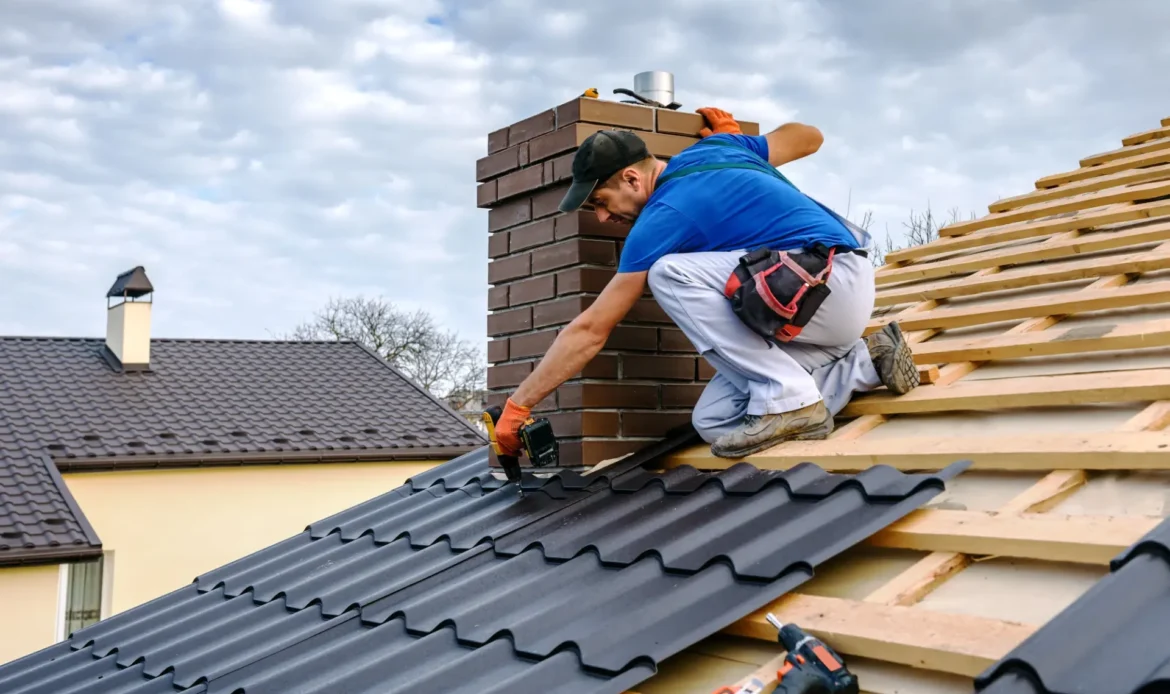
- An Albany homeowner postponed a small roof repair for one more season, and the deck underneath quietly went soft.
- Most decking damage in the Capital Region starts at the eaves, in the valleys, and around penetrations where water has somewhere to sit.
- What looked like a half-day shingle patch from the driveway turned into pulling sheathing, replacing rafter tails, and resetting flashing.
- Skipping a season of maintenance rarely shows up the next month. It shows up two or three winters later, in the wood you cannot see.
The call came in around the second week of May. A homeowner off New Scotland Avenue had a ceiling stain that had not been there in March, and a hunch about why. She had passed on a small repair the previous fall, when we had flagged a soft spot at the north eave during a free check. The estimate sat on the kitchen counter through the winter, and then the spring rain showed up. By the time we got back out to walk the roof, what had been a soft spot the size of a placemat was the start of a serious conversation about roof decking repair in Albany, NY — not just a shingle fix.
This post is about what happens in the wood you cannot see. About how a delayed call turns a contained repair into something that pulls in framing, insulation, and sometimes a quiet argument with the insurance company. And about why, in the Capital Region specifically, the cost of waiting is almost always paid out in sheathing.
Where the soft spot actually came from
When we first walked her roof the previous October, the shingles still looked fine from the ground. Up close, though, the north slope had a row of slightly cupped tabs near the eave, and the gutter behind them was carrying a tea-colored slurry — granules, broken-down sealant, and a little organic matter from the maples along the street. That stain in the gutter was the tell. Granule wash plus a cool, shaded slope plus a gutter that had not been cleared in two seasons is the recipe we see most often before a deck starts to give.
Underneath those shingles, the original 1990s plywood deck had been doing its job for almost thirty years. It had also been quietly absorbing a few cups of meltwater every freeze-thaw cycle, right where the ice would back up off the eave. Plywood that gets wet, then dries, then gets wet again does not fail in one event. It fails in slow motion. The first sign on the inside is usually a faint shadow on the bedroom ceiling that the homeowner attributes to old paint. The second sign is the smell of damp insulation in the attic in April. By the time the ceiling actually drips, the panel is already past saving.
Why one Albany winter is the season that does it
The Capital Region puts roofs through a specific kind of beating that homeowners from milder climates often underestimate. We do not get the heaviest snowfall in the state, but we get the most punishing freeze-thaw rhythm. A January thaw, a refreeze two days later, then a stretch of single digits, then a forty-degree afternoon — that cycle repeats six or eight times in a normal winter. Every cycle is another chance for water to find a way under a shingle, sit on the deck, and freeze back into something the shingle was not designed to hold.
Around Albany, Troy, Saratoga, and the Clifton Park side of the river, we see this pattern concentrate in three places: the north and east eaves where ice dams form first, the valleys where snow piles up and stays, and around chimneys and skylights where flashing was sealed once and never resealed. A deck panel that would last forty years on a dry Arizona roof can be done in fifteen here if those three places get neglected. That is not a flaw in the material. It is the climate doing what the climate does.
What we found when we finally opened it up
By the time we returned to the New Scotland Avenue house in May, the soft spot had spread along the eave for about eleven feet. We started by lifting two courses of shingles and pulling the ice and water shield. The plywood underneath was the color of weak coffee and would not hold a nail in three places. The rafter tails were still structurally sound, but the top inch of the lookout boards had punky edges where capillary water had been wicking sideways.
If she had called us in October, we would have replaced one four-by-eight sheet, run new ice and water shield two courses up from the eave, and re-shingled that section in a single afternoon. The bill would have been modest. By May, we were pulling three sheets, replacing the drip edge that had corroded behind the gutter, rebuilding a section of fascia, and resetting the gutter brackets because the wood they had been screwed into was no longer holding. The job ran three days instead of three hours, and the cost difference was not subtle.
The misconception that cost her the most
The thing she said to me on the porch the first day was the same thing we hear from maybe half the homeowners in this situation. “I thought as long as it was not actively leaking inside, it could wait.” That is the misconception that drives most of the deck repairs we do. A roof that is not leaking visibly is not the same as a roof that is dry. By the time the water makes it through the insulation, across the vapor barrier, and onto the drywall, it has already been in the structure for a season or more. The deck is the early warning system, and you almost never see it without pulling shingles.
The shingles themselves are usually the last thing to fail. They are designed to take a beating. The deck behind them is not — at least, not when it is wet. Most homeowners are watching the wrong layer, and they are watching it from the wrong side.
The decision she had to make once we knew
Once the sheets were off and we could see the run of damage, we sat down at her kitchen table and laid out three options. The first was the targeted repair we were already in the middle of: replace the affected sheathing, redo the flashing at the chimney while we were up there, and call it done. That was the lowest cost path and made sense if the rest of the deck was sound. The second was a partial replacement, taking the entire north slope down to the rafters since that was the side that had taken the worst of the freeze-thaw. The third was a full roof replacement on a system that, frankly, was within five years of needing it anyway.
We talked through what we had seen on the south slope while we were up there. The shingles were aging but not failing. The deck under them, based on what we could probe through the soffit and the attic, was still dry and firm. We recommended the targeted repair, with a plan to reassess the whole roof in three to four years. There was no upside, in her case, to spending the money now on slopes that were still doing their job. That is the call that does not always get made in our industry — recommending less work when less work is the right answer.
Where spending more would have stopped making sense
If the south slope had shown the same staining in the gutter and the same cupping at the eaves, we would have had a different conversation. There is a point where doing a targeted repair on a roof that is going to need replacement in eighteen months is throwing money at a problem that needs a different answer. We have done jobs where the right recommendation was a full tear-off because the rest of the roof was a season or two from telling the same story. We have also done jobs where the right recommendation was the smallest possible roof repair because the rest of the system had real life left in it.
The line between those two calls is not always obvious from the driveway. It usually requires opening at least one section, probing the attic, and looking at the gutters honestly. We try to be the people who tell you which side of the line your roof is on, even when the answer is the less profitable one.
What homeowners usually ask at this point
Most homeowners ask me the same three questions once the soft spot is found, almost in the same order. The first is whether their insurance will cover it. The honest answer is usually no — slow rot from deferred maintenance is the textbook exclusion in most homeowner policies. Insurance is built around sudden, accidental damage. A deck that took two winters to fail is not sudden. We have seen policies pay for the interior drywall repair while declining the roof work entirely, which is a particularly frustrating outcome for the homeowner.
The second question is whether they should have noticed sooner. The truthful answer is that most people would not have, because the early signs live in the attic and behind the gutters, and very few homeowners have a reason to look there in November. The third question is whether they should be worried about the rest of the roof. The answer there depends on what we see when we are up there, and that is a conversation that has to happen on a specific roof, not in the abstract.
If you want a sense of what the underlying maintenance rhythm should look like, our maintenance tips for Albany roofs covers the seasonal checks that catch these problems before the deck gets involved. The short version is that two looks a year — late fall and early spring — and a clean gutter going into winter resolves about ninety percent of what we end up repairing.
What changed after the job wrapped
We finished the New Scotland Avenue house in three days. The new sheathing went in, the ice and water shield went two full courses up the eave instead of the original one, the drip edge got replaced in real metal instead of the original thin gauge, and the gutter went back on brackets screwed into solid wood. The ceiling stain dried out within two weeks once the source was gone. The smell in the attic was gone by July.
She asked me, near the end, what she should be doing differently going forward. I told her the honest thing: the maintenance rhythm matters less than the calendar. Twice a year, walk the perimeter of the house and look up. Look in the gutter. Look at the eaves. If the gutter has a streak of stain on the inside, call somebody. If the shingles at the eave look cupped or wavy, call somebody. The work itself is not complicated. The cost of skipping it for one more season is what gets people.
What the story is really about
The reason we keep coming back to roof decking as a topic is that it sits at the intersection of two things homeowners genuinely cannot see from the ground. The shingles are the part you look at. The deck is the part that holds the shingles. When the deck fails, the shingles are the last thing to know. By the time the homeowner knows, the conversation has changed.
None of this is meant to be alarmist. Most of the roofs in Albany are doing fine. The ones that are not are usually the ones that missed a small intervention in October or November and let the freeze-thaw cycle finish a job that the original installer never imagined would happen. If your gutters are clean and your eaves are dry, you are probably not the homeowner this story is about. If you are not sure which one you are, that is the kind of question worth asking before the next thaw.
If you are weighing whether your own roof needs a closer look, our team handles roof decking repair in Albany, NY and the surrounding Capital Region every week, and we will tell you honestly whether the work belongs on this year’s calendar or next.
More on Residential Roofing from Elite Contracting
The full decision walkthrough is in our pillar guide: The Roof Over Your Head — A Homeowner’s Working Guide.
For service overview, project timelines, and free estimate scheduling, visit our Residential Roofing service page.