

Summary
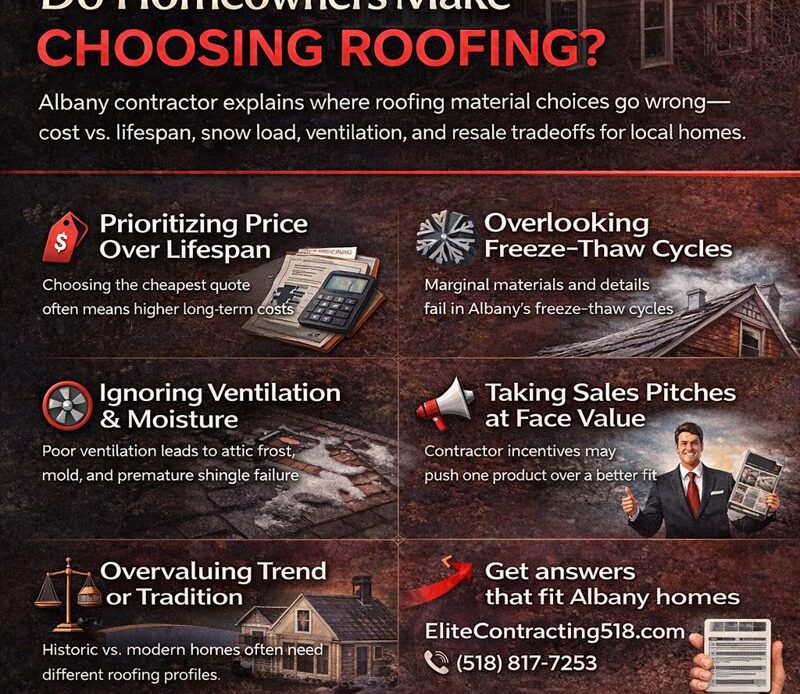
- Albany’s freeze–thaw cycles punish marginal materials and weak details
- Price-only decisions often ignore lifespan, maintenance, and resale realities
- Metal and asphalt both have myths; performance depends on profile, underlayment, and install
- Contractor incentives can skew recommendations—ask material-neutral questions
- Historic vs. modern homes call for different roofing choices and detailing
Introduction
We’ve installed and replaced thousands of roofs across Albany, Troy, Schenectady, Saratoga, and the hill towns over the last 16+ years. When Albany homeowners ask what goes wrong in material selection, we think about real houses we’ve touched: 1890s row homes in Arbor Hill, 1950s ranches in Colonie, and newer colonials in Clifton Park. The patterns repeat. Decisions that look fine on paper fall apart under Capital Region weather, roof pitch, and snow load.
Two quotes may look similar, but the materials and assumptions behind them are often different. We see regrets when choices are made around a single factor—usually price—or when national advice is applied to Albany’s climate. That’s also why local experience matters. When people compare quotes from steel roof installers in Albany, for example, the proposals can vary by panel profile, underlayment, snow retention, and fastener strategy—details that make or break winter performance and lifespan.
Common misconceptions about metal and asphalt roofing
Metal myths we correct most often
- “Metal roofs are loud.” On open framing they can be, but most Capital Region installs go over decked, insulated attics—noise isn’t a practical issue.
- “All metal is the same.” Standing seam, through-fastened panels, and stone-coated steel behave differently under snow creep and thermal cycling.
- “Metal lasts forever.” Steel systems can outlast asphalt, but cut-edge corrosion, poor trim detailing, or mismatched metals can shorten service life.
- “Snow will rip off gutters.” Only when snow retention and eave details are ignored; correct snow guards and strong fascia support prevent this.
Asphalt assumptions that lead to surprises
- “Architectural shingles are automatically 30+ years.” Manufacturer timelines assume ideal ventilation, slope, and sun exposure. South-facing dormers in Albany’s freeze–thaw often age faster.
- “Ice and water shield at eaves is enough.” On low slopes or complex valleys, wider coverage and proper ventilation matter more than the minimum code line.
- “A layer-over is harmless.” Adding shingles to save disposal costs can trap heat, increase weight under wet snow, and hide deck issues.
Why material choice matters in Albany’s climate
Our winter pattern is defined by cycles: thaw, rain, refreeze, then heavy snow. Roofs in the Capital Region deal with snow load, wind-driven rain, and ice dams in the same season.
- Freeze–thaw: Materials and fasteners expand and contract. Through-fastened metal can loosen if not detailed for movement; fiberglass shingles can crack on cold bends.
- Snow load and creep: Unobstructed metal can shed snow suddenly; good for weight but risky without snow guards over walkways. Asphalt holds snow; good for control, higher load on framing.
- Ventilation and moisture: Attics with high interior humidity and inadequate vents create frost on sheathing, leading to premature shingle aging and mold risk.
Material choice and detailing—underlayments, ice barriers, ventilation—must be aligned to your roof geometry. Low-slope porch tie-ins, intersecting valleys in Center Square townhomes, and long north-facing runs in Niskayuna all want different solutions.
Price vs. performance mistakes we see
Chasing the lowest number without normalizing scope is the most common error. The real comparison is cost per year of service, including maintenance.
Budget comparison table (installed in Albany conditions)
| Roof type | Typical installed range | Realistic service life | Notes in Albany use |
|---|---|---|---|
| 3-tab asphalt | $5.00–$6.50/sq ft | 12–18 years | Rarely recommended except on sheds/temporary fixes |
| Architectural asphalt | $6.50–$9.50/sq ft | 18–28 years | Solid value with correct ventilation and ice protection |
| Through-fastened steel | $7.50–$10.50/sq ft | 20–30 years | Budget metal; movement and fastener strategy are critical |
| Standing seam steel | $11.00–$16.00/sq ft | 35–50+ years | Excellent snow behavior with the right profile and guards |
| Stone-coated steel | $10.50–$15.00/sq ft | 30–45 years | Good in neighborhoods where metal sheen is a concern |
Two takeaways: (1) low upfront cost does not always mean lowest total cost, and (2) the install method shifts lifespan more than homeowners expect. We’ve torn off 10-year-old shingles cooked by poor ventilation and serviced 30-year-old steel still going strong—both outcomes were driven by details, not brochures.
For broader context on current budgeting, see our breakdown of 2025 roof replacement costs in the Capital Region.
Misjudging long-term maintenance requirements
Another recurring mistake is underestimating maintenance. The work is not the same across materials.
Maintenance checklist by roof type (every 1–2 years)
- Architectural asphalt: Clean gutters; verify attic vents; inspect for granule loss on sun-exposed slopes; check flashing at chimneys and sidewalls.
- Through-fastened steel: Inspect exposed fasteners for backing out; replace compromised washers; check ridge cap sealant; confirm no rubbing at penetrations.
- Standing seam steel: Inspect snow guards, clip seams at skylights/valleys, and any dissimilar metal contact; clean debris at valleys.
- Stone-coated steel: Clear valleys; verify fasteners covered; inspect coating at hips/ridges after heavy winters.
Skipping these checks is why we see premature failures, especially on roofs with complex flashing around chimneys and dormers common in Albany Victorians.
Energy efficiency tradeoffs by material
We get asked whether metal “saves” on energy. The answer is: sometimes, modestly, and the attic system often matters more.
- Metal roofs with high-reflectance coatings can reduce summer heat gain, helpful on low-shade homes in Guilderland or Clifton Park. In winter, that advantage is less relevant.
- Asphalt’s surface temperature varies with color and sun; attic R-value and ventilation still drive comfort and moisture control.
- Biggest Albany energy gains come from air sealing at the attic floor, proper baffles, and continuous ridge/soffit ventilation—not the shingle or metal panel alone.
Don’t choose material solely for energy savings; choose for durability and detailing first, then pair it with insulation/ventilation improvements.
Design and resale considerations homeowners overlook
We hear from sellers who regret bold choices that clash with street context, particularly in historic areas of the city.
- Neighborhood fit: Matte standing seam in charcoal often reads well on modern colonials and farmhouses. Bright ribbed panels can look industrial on a 1920s craftsman.
- Historic cues: In stockade and brownstone blocks, wood-look textures or high-definition architectural shingles align better with surrounding roofs.
- Color heat effects: Dark roofs look sharp but can run hotter; balanced by proper attic ventilation.
Appraisers and buyers in the Capital Region tend to reward clean installation, documented flashing details, and transferable warranties more than the material label alone.
ROI and lifespan shifts in Capital Region homes
Return on investment varies with roof geometry, shade, sun exposure, snow drift patterns, and attic moisture control. We see higher ROI on metal for long runs with simple eaves (less flashing risk) and on asphalt for complex roofs where metal detailing would be expensive.
Simple cost-per-year calculator
Use this to normalize quotes:
- Installed price (after wood repairs) ÷ expected service years.
- Add expected maintenance (e.g., $50–$150/year for routine checks).
- Adjust service years down 10–20% for heavy shade/moss or complex flashing; up 10–15% for ideal ventilation and simple geometry.
Example
| Option | Installed | Service years | Maintenance/yr | Cost per year |
|---|---|---|---|---|
| Architectural asphalt | $16,000 | 22 | $100 | ($16,000/22)+$100 ≈ $827 |
| Standing seam steel | $28,000 | 42 | $120 | ($28,000/42)+$120 ≈ $787 |
On this hypothetical two-story colonial, standing seam wins on annualized cost because the geometry is simple and ventilation is correct. On a chopped-up roof with five valleys and two chimneys, asphalt often pencils out better.
How to evaluate contractor recommendations
Not every contractor is material-neutral. Some run asphalt-only crews; others only sell metal. We aim to match the material to your house, not our catalog.
Questions that keep recommendations honest
- “What fails first on this material profile in Albany winters, and how do you detail against it?”
- “Show me the snow management plan—guards, eave fastening, and walkway protection.”
- “What ventilation math supports your shingle or metal warranty?”
- “If this were your home and budget, what would you change about this scope?”
When comparing steel roof installers in Albany, ask for specifics: panel gauge, seam type, clip spacing, underlayment brand, and how they handle dissimilar metals at chimneys and copper valleys. The devil is in the trim package and fastening schedule.
For more context on decision traps beyond roofing, our write-up on the top 10 mistakes homeowners make outlines patterns we also see in roof projects.
Decision matrix and a practical checklist
Quick decision matrix
| Situation | Leaning choice | Why |
|---|---|---|
| Simple gable, 6/12+ pitch, long runs | Standing seam steel | Fewer penetrations, clean snow shed, long life |
| Complex roof with multiple valleys/dormers | Architectural asphalt | Lower flashing cost, easier detailing around dormers |
| Historic district with visual guidelines | Architectural asphalt or stone-coated steel | Appearance fit, fewer permit hurdles |
| Low slope (2/12 to 3/12) over living space | Standing seam or modified system | Better water handling at low pitch |
| Tight budget, short horizon (5–10 yrs) | Architectural asphalt | Best upfront value without long-horizon premium |
Step-by-step checklist
- Confirm roof geometry: slope, valleys, penetrations, and eave lengths.
- Assess attic: current ventilation (soffit and ridge), insulation depth, and moisture signs.
- Match material to climate risks: snow load zones, shade/moss, ice dam history.
- Normalize quotes: underlayment types, flashing plans, ventilation upgrades, and wood repair allowances.
- Calculate cost per year (see calculator above) and maintenance expectations.
- Review neighborhood and historic constraints before picking color/profile.
- Ask for installer’s failure points and how they mitigate them.
When it makes sense to reconsider material mid-project
We rarely switch materials midstream, but it’s justified when tear-off reveals conditions that change risk:
- Hidden low slope: If we uncover a section under 3/12 pitch that was masked by layers, switching from shingles to standing seam or a low-slope system avoids chronic leaks.
- Decking damage and ventilation gaps: If attic moisture is worse than expected, moving from a dark asphalt plan to a lighter metal with full vent redesign can extend longevity.
- Structural concerns at eaves: Where snow loads are stressing fascia, we may add snow retention and modify the plan—even on metal—to protect entries and gutters.
Change orders are not ideal, but they can be the difference between a roof that works on paper and one that survives our winters.
Material mistakes specific to historic vs. modern homes
Historic homes (brownstones, Victorians, pre-war colonials)
- Overlooking permit and aesthetic constraints: Shiny ribbed panels often draw scrutiny; textured shingles or stone-coated steel read better.
- Ignoring masonry flashings: Brick chimneys need stepped, counter-flashed metal (or copper); caulk-only “repairs” fail quickly.
- Weight stacking: Layering shingles adds weight to older rafters already carrying wet snow; full tear-off is safer.
Modern homes (ranches, newer colonials, contemporary builds)
- Underestimating large eave snow slides: Long, uninterrupted metal runs above doorways need snow guards and stronger gutter details.
- Skipping intake ventilation on tight soffits: Closed soffits or spray foam renovations complicate airflow—plan the vent path before picking material.
- Color/solar interaction: Dark roofs above cathedral ceilings amplify summer heat without proper baffles and venting.
Problems unique to steel roofs that are often misunderstood
- Fastener strategy: Through-fastened panels are budget friendly but want routine checks; standing seam uses concealed clips that accommodate movement better.
- Galvanic pairing: Mixing copper and bare steel at valleys or snow guards can accelerate corrosion; use compatible metals and isolators.
- Cut-edge exposure: Field cuts must be treated correctly; sloppy cuts rust early along eaves and penetrations.
- Snow behavior: Steel sheds snow. That’s good for load reduction but requires planned retention over entries, garage doors, and walkways.
- Underlayment selection: Synthetic plus full-ice shield in valleys/eaves is standard here; high-temp underlayments help under darker metal colors.
Seasonal patterns Albany homeowners should factor in
- Late fall installs: Prioritize ice/water coverage and heat-welded or high-bond underlayments as temperatures drop.
- Mid-winter work: We target clear, cold days for metal seam work; adhesive performance changes below 40°F—crew sequencing matters.
- Spring tear-offs: Best for diagnosing and repairing deck damage; dryer conditions stabilize plywood replacement.
- Early summer: Good for ventilation upgrades and painting soffits/fascia with less weather risk.
FAQs from Capital Region homeowners
Does a metal roof always beat asphalt in Albany?
No. On simple roofs you often see better cost-per-year with standing seam. On complex, valley-heavy roofs, architectural asphalt can be more practical and reliable for the dollar.
Will a steel roof damage my gutters when snow slides?
Not if the eave is detailed correctly. We add snow guards, reinforce gutter hangers, and design discharge paths away from doors and walkways.
Is it smarter to search “steel roof installers near me” or name my city?
Use location-specific language—Albany, Capital Region—so you get crews who build for our snow, wind, and freeze–thaw patterns.
Can I place metal over existing shingles?
Sometimes, with furring to create a vented space and if structural and moisture conditions allow. But we prefer tear-offs for deck inspection and to address ventilation.
How long should I expect architectural shingles to last here?
We quote 18–28 years depending on exposure, ventilation, and roof complexity. South-facing slopes and poor attic moisture control pull that number down.
Conclusion
Most roofing regrets we see in Albany come from focusing on the surface product and ignoring the system underneath: ventilation, underlayment, flashing, and snow management. Material is still a major decision, but performance flows from the match between roof geometry, climate, and detailing. That’s why two houses on the same street can make different choices and both be right. Sorting these variables up front reduces the surprises later and keeps decision fatigue in check. The more you translate options into cost per year, maintenance expectations, and neighborhood fit, the clearer the path becomes.