

Every homeowner in the Capital Region will replace, repair, or maintain a roof at least once during the time they own their house. Most will do it more than once. This is the walkthrough for that whole arc — from picking materials to understanding install day to keeping the roof healthy for as long as possible — written for homeowners, not for roofers, by a family-owned crew that’s been doing this work in Clifton Park, Albany, Troy, Saratoga, and the surrounding towns since 2016.
If you’ve never had to think about your roof before now, this is the piece to read first. The pieces linked at the bottom go deeper into individual topics.
Choosing materials
You have three real material choices for a residential roof in Upstate NY: asphalt shingle, metal, or specialty (slate, tile, wood shake — less common).
Architectural asphalt shingle is the dominant material in the Capital Region for good reason. Modern architectural shingles come in wide color and style options, install cleanly, cost less than metal upfront, and carry manufacturer warranties in the 25-to-50-year range. Real service life is typically 25 to 30 years in our climate with proper ventilation. This is what we install on the majority of residential homes and what we recommend as the default.
Metal roofing (standing seam or exposed-fastener) has a service life comfortably north of 50 years, sheds snow better than shingle, and looks striking on the right architecture. It costs 2× to 3× architectural asphalt upfront. For homeowners planning to stay 20-plus more years, the long-term math often works. For homeowners selling in 5–10 years, the payback doesn’t materialize.
Specialty materials (slate, tile, wood shake) are worth considering only in specific situations — historic homes where authenticity matters, or high-end architecture where the material is part of the design. Costs are dramatically higher and installation requires specialty training. We’ll refer you to a specialist when it’s appropriate rather than pretending we do slate ourselves.
The right choice depends on how long you plan to be in the house, what the surrounding neighborhood looks like architecturally, your budget, and your appetite for maintenance versus upfront cost. This is a real conversation, and we walk homeowners through it on every quote.
The install process, plainly
Most homeowners have no idea what actually happens on install day. Here’s what you should see if you hire a competent roofer for a full replacement.
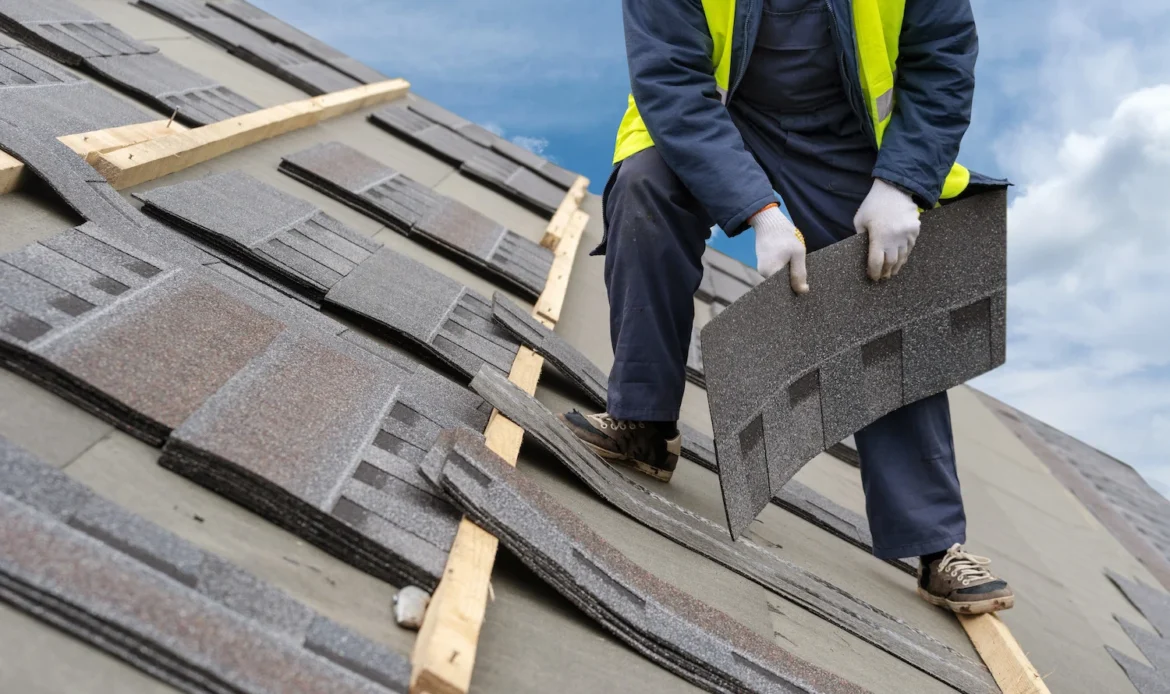
Day one: tear-off. The crew arrives early (usually 7 AM). Dumpster gets set up over tarps to protect your driveway. Existing shingles come off in sections. Nails come out. Old underlayment comes off. The sheathing gets inspected. Any soft or damaged panels get replaced (usually 2–5 sheets on a typical Upstate NY replacement, sometimes zero, sometimes more). Fresh synthetic underlayment goes over the whole deck before end of day. Ice-and-water shield goes along all eaves and in the valleys.
Day two: install. New drip edge along rakes and eaves. Field shingles come up the slope in a six-nail pattern with staggered joints. Every roof penetration gets new flashing — chimney step and counter-flashing, skylight kits, pipe boots sized to the actual pipe diameter, vent stack covers. Ridge vent goes in at the peak. New cap shingles seal it up. Cleanup with magnetic bars in the yard to catch stray nails.
Day three: the walk. Somebody from the crew — often the owner — comes back the next morning and walks the whole roof one more time. Photos of finished work. Warranty documentation to the homeowner. Any punch-list items get addressed. This is the piece some roofers skip. We don’t.
Total install time on a mid-sized Capital Region home: two days for the crew, three days including the final walk. Bigger homes or complex geometry can go longer.
Maintenance that actually matters
The single most impactful thing you can do to extend your roof’s life costs $0 and takes 20 minutes: clean your gutters twice a year. Blocked gutters back up water at the eave, which finds its way under shingles and into your fascia over time. Fall cleaning (after leaves drop) and spring cleaning (after winter debris) is the whole program.
Beyond that:
Trim overhanging tree branches at least 10 feet back from the roof surface. Branches that scrape shingles wear granules off prematurely and drop debris that traps moisture. Squirrels also use overhanging branches to access the roof, where they cause damage.
Address moss and algae if you see dark streaks on the north-facing slopes. Zinc or copper strips installed at the ridge slow algae growth chemically. Chemical treatments applied every 5 years keep the roof clean-looking.
Inspect after every major storm. Not by climbing on the roof — from the ground, with binoculars if needed, or with a phone camera on a stick. You’re looking for missing shingles, lifted tabs, or displaced flashing. Catch damage early and it’s a small repair. Miss it for a year and it’s often a larger repair or worse.
Have a professional roof inspection every 5 years or sooner if your roof is over 15 years old. This is what we’re set up to do — walk the roof, check the flashings, photograph any concerns, give you a written condition report and a service-life projection. Free for existing customers, modest fee for new ones (usually credited toward any repair work you decide to do).
Seasonal prep for Upstate NY roofs
Spring: Clean gutters after winter debris. Walk the perimeter and look for any winter damage. Trim branches back that grew too close during summer.
Summer: Attic ventilation check. If your attic is running above 130 degrees on a sunny day, you’re cooking your shingles from below. Ventilation improvements now add years of shingle life. Address any minor issues you can see before hurricane season and fall storms.
Fall: Second gutter cleaning after leaves drop. This is the most important single maintenance task in the calendar. Roof inspection if you’re due — better to find issues in October than in February.
Winter: Watch for ice dam formation at the eaves. If you see visible icicles or ice building up along the roof edge, that’s a signal that snow is melting on your roof and refreezing at the cold eave. Address the underlying cause (usually attic insulation and ventilation) before it becomes a leak. Don’t try to chip ice off your roof yourself.
Common mistakes that cost Capital Region homeowners the most
Waiting too long to replace. Every year of extra life you squeeze out of a failing roof risks a major interior water event. When repair costs are stacking up and buying less time each round, the math has flipped — replace and stop paying to defer inevitability.
Choosing the cheapest quote without understanding what’s excluded. The cheapest quote often skips ice-and-water shield coverage, uses off-brand underlayment, skimps on flashing details, and installs over the existing roof instead of tearing off. The savings are illusory. What you’re buying is a shorter service life.
Skipping ventilation on the replacement. A new roof over a poorly-ventilated attic will fail early. Ridge vent, soffit intake, insulation baffles — these are cheap during a replacement and expensive to retrofit later.
Falling for storm-chaser sales tactics. After any major weather event, out-of-state crews descend on the Capital Region canvassing neighborhoods. Some are legitimate; some are running claim-inflation schemes. Use a local, established roofer with a real address and a review history you can verify.
DIY roof safety. People die falling off residential roofs every year. If you’re not a trained roofer with proper fall protection, stay on the ground. Every inspection task can be done from the ground, from a phone camera, or by hiring a professional.
When to call us
- You need a diagnosis on a specific problem (leak, damage, aging concern)
- You’re planning a replacement and want an honest quote and material walkthrough
- Your roof is old and you want a service-life assessment before deciding
- You have insurance damage and need someone to work the claim end-to-end
- You want a maintenance inspection to catch issues before they become expensive
Paul Sandul, Elite Contracting. Family-owned. Owens Corning Preferred. Clifton Park.
Sister topics
For deeper reading on specific residential decisions:
- Choosing materials in detail: Choosing Roofing Near Me — Guide to the Best Materials
- Mistakes to avoid: Top 10 Mistakes Homeowners Make
- Ongoing maintenance: Roofing Albany NY Maintenance Tips
- Best material for your specific home: Best Material for Your Home in Roofing
This is the pillar guide for our residential roofing service. For the full service overview, project timelines, and free estimate scheduling, visit our Residential Roofing service page. Paul Sandul, Elite Contracting.