

Summary
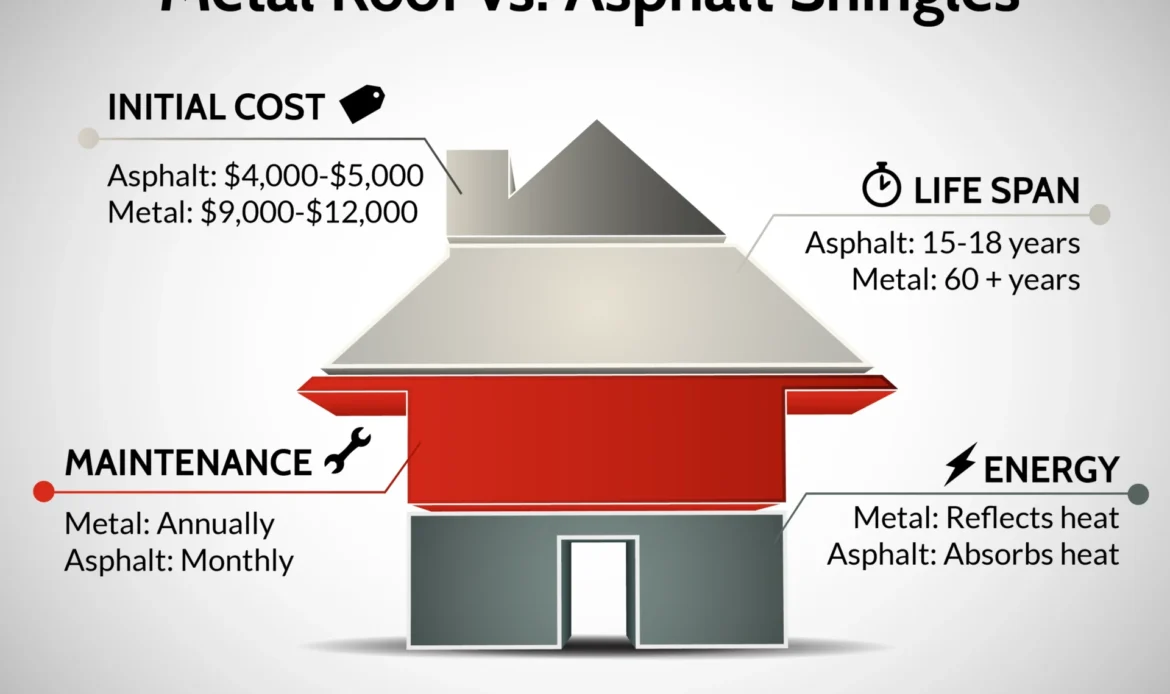
- Upfront cost: asphalt is lower; metal’s lifetime cost is often lower for long holds.
- Albany climate: snow, ice, and wind favor durable assemblies and proper details.
- Project context: roof shape, layers, and access shift pricing more than materials.
- Scenarios: short hold favors asphalt; long-term or solar-ready often favors metal.
- Process: clear scope, attic inspection, and snow management planning avoid surprises.
Introduction
We work on roofs across Albany and the Capital Region every week. Our crews see the same patterns repeat: heavy, wet snow, freeze–thaw cycles, spring winds, and older framing that wasn’t designed for layers of past roofing. Those realities affect how both metal and asphalt perform and what they cost to install here.
Based on 16+ years of local projects—colonials in the city, ranches in the suburbs, and mixed-use buildings along busy corridors—we’ve learned that the right roofing decision is less about national averages and more about your roof shape, attic ventilation, and how long you plan to hold the property. Below, we lay out Albany-specific cost ranges, the tradeoffs behind them, and what we expect over the life of each system.
How Albany’s climate changes the roofing equation
Our weather rewards durable assemblies and clean details. Here’s how it plays out:
- Snow and ice: Roofs must manage sliding snow, ice dams at eaves, and freeze–thaw at penetrations.
- Wind: Nor’easters and spring gusts expose weak nailing patterns and loose flashing.
- Temperature swings: 50-degree swings in a day are normal in shoulder seasons, stressing fasteners and sealants.
- Tree cover: Shaded roofs in neighborhoods like Pine Hills and parts of Guilderland stay damp, which ages asphalt faster.
Performance notes:
- Metal sheds snow quickly; plan snow guards above entries, driveways, and walkways.
- Architectural asphalt handles wind reasonably well when nailed and flashed correctly; it is more susceptible to ice dams and heat aging.
- Both systems benefit from full ice-and-water protection at eaves and valleys and balanced attic ventilation.
Cost comparison: upfront, maintenance, and lifespan
Below are working ranges we see for typical single-family pitched roofs in Albany (about 1,700–2,000 square feet of roof area, simple to moderately complex gables/hips). Steeper slopes, multiple layers to remove, skylights, and difficult access push costs higher.
| Item | Architectural Asphalt | Exposed-Fastener Metal | Standing Seam Metal |
|---|---|---|---|
| Typical installed cost (materials + labor) | $6.00–$9.50 per sq ft ($12k–$19k) | $8.50–$12.50 per sq ft ($17k–$25k) | $13.50–$20.00 per sq ft ($27k–$40k) |
| Tear-off (per existing layer) | $1.00–$1.75 per sq ft | $1.00–$1.75 per sq ft | $1.00–$1.75 per sq ft |
| Deck repair (if needed) | $60–$85 per sheet of plywood | $60–$85 per sheet of plywood | $60–$85 per sheet of plywood |
| Ice-and-water (eaves/valleys) | $0.75–$1.25 per sq ft of treated area | $0.75–$1.25 per sq ft of treated area | $0.75–$1.25 per sq ft of treated area |
| Snow guards (select areas) | Rarely used | $12–$20 per linear foot | $12–$20 per linear foot |
| Expected service life | 18–28 years | 25–35 years | 40–60+ years |
| Maintenance over 20 years | Periodic repairs $1,500–$3,500 total | Fastener/trim checks $800–$2,000 total | Low; inspections and sealant refresh $600–$1,500 |
| Replacement count over 50 years | 2–3 roofs | 1–2 roofs | 1 roof |
Notes from local jobs:
- Complex dormers and multiple valleys add labor time for any system.
- Standing seam needs skilled fabrication; the labor share is higher than materials.
- Asphalt price volatility tracks oil; metal tracks coil supply and fabrication lead times.
Albany labor and seasonality patterns
- Spring/fall are busiest; summer heat slows production on steep roofs.
- Winter installs are possible. We’ve done standing seam in sub-freezing temps with proper underlayment and safety plans; weather windows matter.
- Some suppliers run seasonal promotions; savings are usually modest compared to scope-driven cost drivers.
For more on pros and cons by system, see our metal vs. asphalt comparison guide.
Benefits of metal roofing for Capital Region homes and small businesses
- Snow management: Smooth panels shed snow; planned snow retention protects walks and gutters.
- Wind resilience: Proper clip spacing and panel engagement handle common Capital Region wind events.
- Service life: Standing seam often outlasts one or two asphalt cycles here.
- Lower dead load: Lighter per square foot than layered asphalt, helpful on older framing.
- Solar-ready: Standing seam accepts clamp-on rails without new roof penetrations.
- Fire resistance: Useful near chimneys and in neighborhoods with tight setbacks.
We often see these advantages pay off on simple gables, long holds, or properties where snow drops onto traffic areas that must be controlled with snow guards.
Misconceptions about pricing and value
- “Metal always costs double.” Not always. Exposed-fastener systems sometimes land 20–40 percent above architectural asphalt. Standing seam often runs 50–100 percent higher upfront, but the life-cycle math can close the gap.
- “Metal is noisy.” With a solid deck, underlayment, and insulated attic (typical in Albany homes), rain noise is similar to asphalt. Outbuildings with open framing are the outliers.
- “You can’t install metal over shingles.” Sometimes you can, with furring and ventilation planning, but we evaluate deck condition and code first. Many Albany roofs already have two layers; tear-off is common to reset the assembly.
When asphalt might be the smarter call
- Short ownership horizon: If you plan to sell within 5–8 years, asphalt’s lower upfront cost can be reasonable.
- HOA or historic constraints: Some districts prefer asphalt profiles and colors.
- Highly cut-up roofs: Many valleys, skylights, and dormers may narrow metal’s labor advantage.
- Tight budgets with urgent leaks: Asphalt can stabilize the envelope quickly with lower material cost.
- Very low-slope transitions: We sometimes recommend pairing asphalt on steeper sections with a dedicated low-slope membrane, depending on details.
Warranty and insurance factors specific to Albany installations
- Ice barriers: Local code enforcement commonly expects ice-and-water shield from eaves to at least 24 inches inside the warm wall plane. We treat valleys the same way.
- Wind ratings: Architecturals we install are rated 110–130 mph with proper nailing. Standing seam wind performance depends on clip spacing and panel engineering.
- Finish warranties: Premium metal panels carry paint finish warranties; we confirm the exact term and what the fine print covers (chalking, fade, film integrity).
- Workmanship: Local warranties vary from 5–15 years; details like chimney flashing, skylights, and ventilation fall under this and matter more than the headline number.
- Insurance: Some carriers recognize impact and fire resistance for metal; any premium reductions are policy-specific. Ice dam claims hinge on insulation/ventilation as much as roofing material.
Return on investment: Albany-centric view
| Holding Period | Architectural Asphalt | Standing Seam Metal |
|---|---|---|
| 0–10 years | Lower cash outlay; limited maintenance. Resale benefit is modest. | Higher cash outlay; marketing advantage for some buyers; partial payback. |
| 10–25 years | Approaches end of life; repairs/curled edges visible; potential buyer concessions. | Mid-life; minimal maintenance. Higher retained value at resale. |
| 25–50 years | One replacement likely within this window. | Typically still serviceable; repainting or minor trim work may suffice. |
For long holds, we often see standing seam carry the lowest lifetime cost, especially on simple gables. On complex roofs or shorter holds, asphalt keeps total ownership costs competitive.
Long-term maintenance realities in Upstate NY seasons
Asphalt shingles
- Spring check: Missing tabs, nail pops, lifted flashing after winter winds.
- Shaded slopes: Gloeocapsa algae and moss; cleaning may be needed.
- Ice dam scars: Granule loss at eaves; watch for leaks at soffits.
Metal roofing
- Snow guards: Inspect anchorage yearly where snow loads are heavy.
- Sealants: Refresh at penetrations every 10–15 years as needed.
- Exposed fastener systems: Plan a mid-life screw replacement cycle.
Both systems benefit from clean gutters, clear valleys, and balanced attic ventilation to keep deck temperatures steady.
Choosing by home type and roof structure
- Simple ranch or cape (4/12 to 7/12 pitch): Standing seam often delivers the best life-cycle value; exposed-fastener metal is a budget metal option; architectural asphalt stays compelling if the hold period is short.
- Victorian with dormers and multiple valleys: Asphalt simplifies detailing and can keep costs predictable. Standing seam is possible but expect higher labor and custom flashing.
- Two-family with sidewalks tight to eaves: Metal plus snow retention can reduce winter hazards. We map snow paths before layout.
- Lake-effect edges west of Albany or high tree cover: Metal resists moss and drip-line wear; asphalt requires more cleaning and eave attention.
Questions to ask local roofers before you decide
- What is the exact scope line for ice-and-water, synthetic underlayment, and ventilation improvements?
- How will you handle snow shedding if we choose metal near entries and driveways?
- Where will you stage materials and dumpsters on our lot or street?
- What is your plan for chimney, skylight, and wall flashings—reuse or replace?
- How many existing layers are on our roof, and what is the tear-off and disposal cost per layer?
- If we install solar later, how will the roof system accommodate it?
- What deck repairs are typical in our neighborhood’s housing stock, and how are they priced?
- What workmanship warranty term do you stand behind, and what are the exclusions?
Step-by-step: what to expect on a metal roofing project
- Assessment: Attic ventilation, deck condition, number of layers, snow/ice risk mapping.
- Scope and options: Panel profile, metal type, snow guards, and flashing package.
- Scheduling: Weather windows and staging. Winter installs add planning but are feasible.
- Tear-off and prep: Deck repairs, underlayment, and ice-and-water at eaves and valleys.
- Panel fabrication and layout: Onsite forming for standing seam or pre-cut delivery.
- Installation: Clips/fasteners, order of operations around chimneys and transitions.
- Snow management hardware: Guards or fences where required.
- Final walkthrough: Fastener checks, detail review, cleanup, and documentation.
For timing and budget details by phase, see our overview of metal roof installation cost, timeline, and process.
Budget scenarios we see in Albany
| Scenario | Typical Choice | Why it fits | Watch-outs |
|---|---|---|---|
| 5–8 year hold on a modest ranch | Architectural asphalt | Lowest upfront cost; straightforward details | Confirm ventilation to limit ice-dam risk |
| Long-term owner on simple gable | Standing seam metal | Best lifetime value; solar-ready | Plan snow guards over walks and garage |
| Cut-up roof with multiple valleys | Architectural asphalt or hybrid | Asphalt simplifies flashing; pair with membrane on low-slope areas | Labor can exceed material costs either way |
| Mixed-use with heavy foot traffic below eaves | Standing seam + snow retention | Controls snow slides; durable finish | Budget for engineered snow guard layout |
Where local expertise matters
Estimating here is about the assembly. We look at soffit and ridge ventilation, attic insulation, and eave details first. Those pieces drive whether a metal or asphalt system will actually hit its expected lifespan in our climate. As metal roof installers in albany new york, we’ve learned that one extra day spent correcting ventilation usually pays for itself in reduced ice-dam risk and longer shingle or panel life.
Frequently asked questions
How much more does standing seam cost than asphalt in Albany?
On simple roofs, we see standing seam land about 50–100 percent higher upfront than architectural asphalt. Complexity can widen or narrow that spread.
Can metal be installed over existing shingles here?
Sometimes. We verify layer count, deck condition, and ventilation. Many Albany homes already have two layers, which pushes us to a full tear-off by code and best practice.
Is metal too heavy for older framing?
No. Metal is typically lighter than a multi-layer asphalt roof. The key is a sound deck and proper fastener schedule.
Will metal roofing reduce ice dams?
It can help snow shed, but true ice-dam prevention relies on insulation, air sealing, and ventilation. We evaluate those first.
Why do prices vary so much for people searching “roofers near me” in Albany?
Roof geometry, access, and scope definitions differ. Two roofs with the same square footage can vary by thousands because of dormers, skylights, or the need for snow management hardware.
Does metal make rain louder?
Not on a typical Albany home with a deck, underlayment, and insulated attic. The difference from asphalt is minimal.
Who should I talk to if I want a local perspective?
Any experienced Capital Region roofer who regularly installs both systems can show you recent jobs and break down assembly decisions. As metal roof installers in albany new york, we focus on scope clarity—especially at eaves, valleys, and ventilation—because those details decide performance here.
Conclusion
In the Albany market, asphalt shingles deliver lower upfront cost and workable performance when the assembly is well detailed. Metal roofing demands more budget on day one but usually returns that spend over time, especially on simple roofs and long holds. Most of the real cost difference sits in the specifics: how many layers come off, how we handle eaves and valleys, the roof’s geometry, and whether snow retention is required. When we match the material to the structure, the climate, and the ownership plan, both systems can serve well in the Capital Region.