

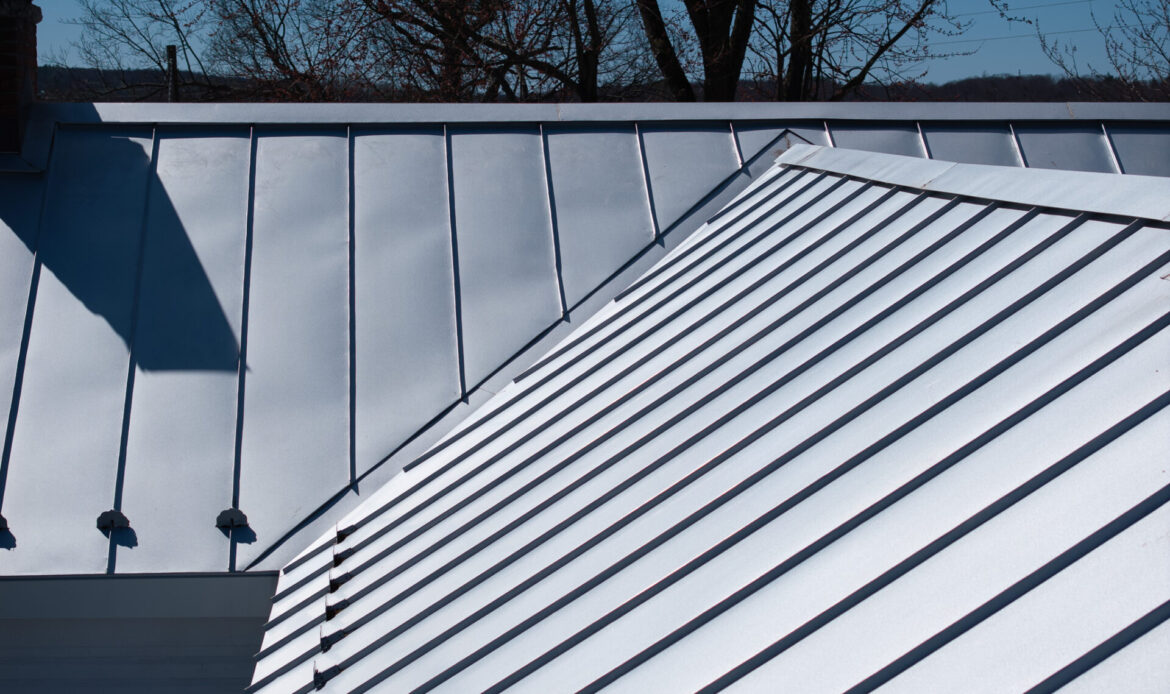
Upstate NY winters are tough on roofs. Heavy lake-effect snow, freeze-thaw cycles, spring winds, and summer sun push asphalt shingles to their limits. Many homeowners are moving to metal because it handles snow, sheds water fast, and holds its color and shape for decades. It also looks clean and modern on Colonials, ranches, farmhouses, and lake homes across the Capital Region.
But you still need straight answers. How much will it cost? How long will it take? What happens on your property from day one to final cleanup? If you want a local pro to discuss options, Elite Contracting serves the Capital Region with residential metal roofing.
Reaching out to a reputable roofing contractors in Albany NY can help you understand what may work for you.
Below is a practical, step-by-step guide to help you plan, budget, and schedule with confidence.
Why A Metal Roof Can Make More Sense
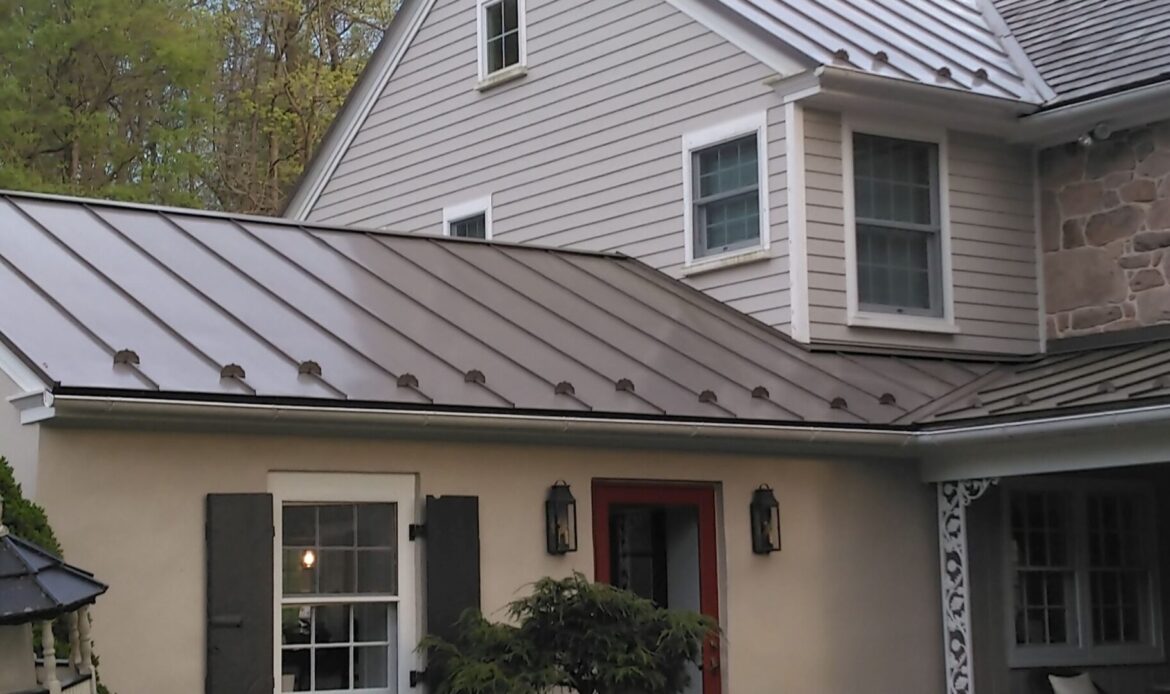
Lifespan
A well-installed metal roof can last 40–70 years. Standing seam steel and aluminum panels resist cracking, curling, and UV damage. Many homeowners replace asphalt twice in the time a quality metal roof lasts once.
Snow Shedding
Metal panels shed snow fast, which reduces ice dams and roof load during big storms. Snow guards can be added above entries, decks, and walkways to control sliding snow in high‑traffic areas.
Fire and Mold Resistance
Metal is non-combustible and does not support mold or mildew. That matters in densely wooded areas, neighborhoods with outdoor fire pits, and lake properties where humidity lingers.
Low Maintenance
Quality coatings resist fading and chalking. Fasteners are concealed on standing seam systems, which reduces points of wear. Routine inspections and light cleaning typically keep the system in top shape.
Cost Breakdown: What You’ll Pay and Why
Here are typical installed price ranges in Upstate NY, including tear-off (when needed), underlayment, trim, and standard flashings. Actual cost depends on roof complexity, pitch, access, and selected profile.
| Material / Profile | Typical Installed Cost (per sq ft) | Expected Lifespan | Approx. Cost per Year of Service |
|---|---|---|---|
| Exposed-Fastener Steel (29–26 ga) | $6.50 – $10.00 | 25 – 40 years | $0.16 – $0.40 |
| Metal Shingles / Stone-Coated Steel | $10.00 – $16.00 | 40 – 50+ years | $0.20 – $0.40 |
| Standing Seam Steel (24–26 ga) | $11.00 – $18.00 | 40 – 60+ years | $0.18 – $0.45 |
| Standing Seam Aluminum | $13.00 – $20.00 | 50 – 70+ years | $0.19 – $0.40 |
Cost vs. lifespan is the key. Many asphalt roofs in our climate need replacement in 15–20 years. When you spread a metal roof’s cost across 40–70 years, the annualized cost often ends up comparable or better, with stronger weather performance.
Estimated Totals by Home Size (Standing Seam Steel)
The ranges below assume a simple to moderately complex roof with standard tear-off and high‑temp underlayment.
| Roof Size (Squares) | Roof Area (sq ft) | Estimated Total Installed |
|---|---|---|
| 15 squares | 1,500 | $16,500 – $27,000 |
| 20 squares | 2,000 | $22,000 – $36,000 |
| 25 squares | 2,500 | $27,500 – $45,000 |
| 30 squares | 3,000 | $33,000 – $54,000 |
Complex roofs (multiple hips/valleys, dormers, skylights), steep pitches, difficult access, or premium coatings push costs higher. A straightforward ranch roof sits near the low end.
Planning note: you can reduce change orders by asking for a detailed scope that names panel gauge, finish (e.g., Kynar/Fluoropolymer), underlayment spec, flashing details, and snow retention plan. This is standard for a quality metal roof installation.
Project Timeline: From First Call to Final Inspection
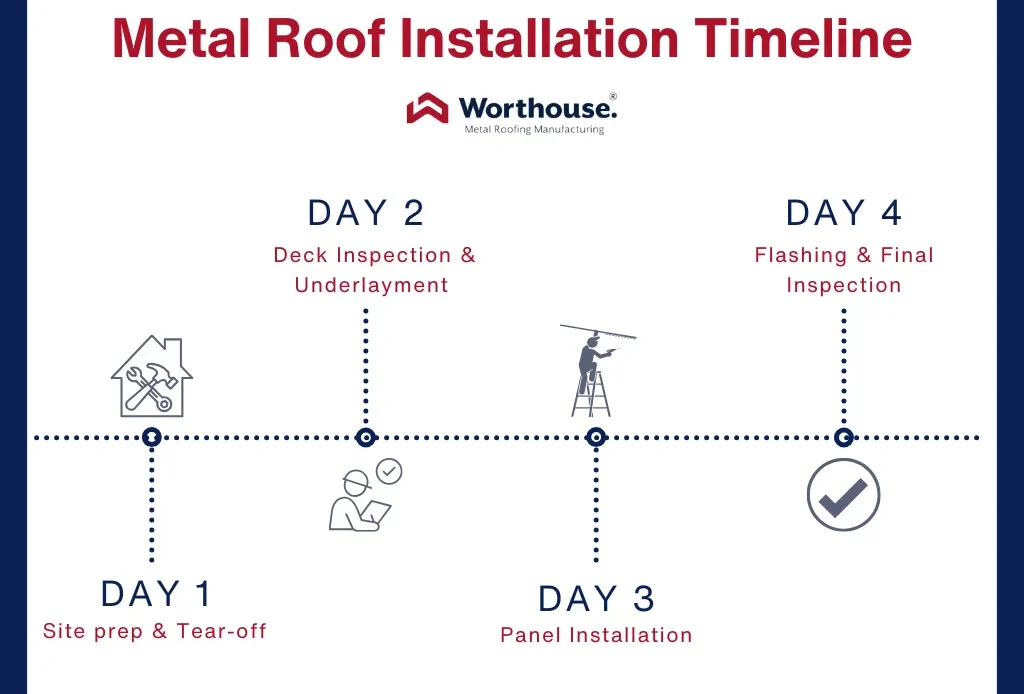
Most projects follow a simple sequence. Below is a typical schedule for a 20–25 square roof in the Capital Region.
| Phase | What Happens | Typical Duration |
|---|---|---|
| Site visit & proposal | Measure, inspect attic/venting, review profiles/colors, provide written scope | 1–3 days from first contact |
| Permitting & material order | Contract signed, permit filed, panels and trim ordered | 5–15 business days |
| Staging & delivery | Dumpster delivered, materials placed, safety setup | Half day |
| Removal & dry-in | Tear-off (if required), deck repairs, ice/water and underlayment installed | 1–2 days |
| Panel installation | Panels cut/formed, seams locked, flashings and trim installed | 1–3 days |
| Final details | Snow guards, vent boots, ridge caps, sealant checks | Half to 1 day |
| Cleanup & inspection | Magnetic nail sweep, debris removal, municipal or third‑party inspection if required | Half day |
Expect 3–6 on-site working days for a typical home once materials arrive. Permits are handled through your town or city building department. Reputable installers coordinate permits and inspections as part of a standard metal roof installation.
Step-by-Step Installation Walkthrough
- Preparation – Protect landscaping and siding. Set safety lines. Verify panel layout from the ground. Confirm attic ventilation plan and any decking repairs.
- Tear-off or Layover – Tear-off is common for metal, especially when shingles are curled, decking needs repair, or ventilation/insulation upgrades are planned. Layovers are sometimes possible on one flat layer of shingles in good condition, but full tear-off gives the best long-term result.
- Deck Inspection & Repairs – Replace soft or delaminated sheathing. Check rafters for rot or prior leak damage.
- Underlayment – Install high‑temperature ice and water shield at eaves, valleys, and penetrations, then synthetic underlayment on the remaining field. In Upstate NY, full-coverage high‑temp membranes are common on higher‑risk roofs.
- Flashing Prep – New drip edge, valley metal, step flashings, and chimney counterflashings as needed. Penetrations get high‑temp boots or custom flashing.
- Panel Layout – Snap lines for square alignment. Pre-cut panels to length. Keep hems consistent along eaves and rakes.
- Panel Installation & Seaming – For standing seam, fasten clips to the deck, place panels, and mechanically or snap‑lock seams. Confirm seam engagement and straightness on every run.
- Ridge, Hips, and Trim – Install ridge caps with proper venting components. Fit hip caps, gable trim, and closures to keep wind‑driven rain and pests out.
- Ventilation – Balance intake and exhaust. Many homes use soffit vents and a vented ridge. Proper venting controls moisture and helps winter ice dam prevention.
- Snow Management – Add snow guards or rail systems above doors, walkways, and decks as needed.
- Quality Checks – Inspect seams, fastener torque, hem tightness, sealant placement, and flashing overlaps. Spray-test critical areas if needed.
- Cleanup – Remove debris. Magnetic sweep for nails and screws. Walk the site with the homeowner.
Weather Dependence in Upstate NY
Snow and rain drive scheduling. Installers plan tear-off and dry‑in on clear days. If a storm approaches, the crew will secure the roof with high‑temp underlayment and waterproof details before stopping. Cold weather installs are normal here; pros use cold‑rated sealants and high‑temp membranes, and they keep panels dry to avoid ice. Wind is the bigger limiter for panel handling and safety.
Energy Efficiency: How Metal Helps Year-Round
- Reflectivity – Many metal finishes reflect more solar radiation than dark shingles. That lowers attic temperatures in summer.
- Summer Cooling – Lighter colors and reflective coatings can reduce cooling demand by 10–25% on sunny days.
- Winter Stability – With proper attic insulation and balanced ventilation, metal maintains a consistent roof deck temperature. That reduces ice dam risk and helps your heating system run more evenly.
- Solar-Ready – Standing seam roofs accept clamp-on mounts that avoid roof penetrations, which is a plus if you add solar later.
Aesthetics and Curb Appeal
Metal is not just barns and cabins. You can match almost any architectural style:
- Standing Seam – Clean vertical lines suit modern homes, farmhouses, and Colonials.
- Metal Shingles – Profiles that mimic slate, cedar, or architectural shingles with the strength of steel.
- Color Options – Popular colors in the Capital Region include charcoal, matte black, bronze, forest green, and coastal grays. Coordinate with trim, siding, and window color for a unified look.
- Resale – Buyers value the lifespan and low maintenance. A new metal roof often becomes a selling point in listing photos and disclosures.
Common Myths, Debunked
- “Metal roofs are loud.” – On a home with decking and attic insulation, rain noise is comparable to shingles. Most homeowners notice no difference.
- “They rust.” – Quality steel panels use galvanized or galvalume substrates and durable finishes. Aluminum does not rust and is a smart choice near lakes or salt exposure.
- “Hail ruins metal.” – Standard hail in Upstate NY rarely dents 24–26 gauge standing seam. Severe hail can mark any roof; higher-gauge panels resist better. Many insurers recognize the durability of metal roofing.
Maintenance Tips and Roof Care Checklist
Metal is low maintenance, not no maintenance. Use this quick checklist:
- Inspect roof and attic once a year, ideally spring or fall.
- Keep valleys and gutters clear of leaves and pine needles.
- After major storms, check for debris accumulation and any bent trim.
- Look at flashings around chimneys, skylights, and vents for movement or sealant wear.
- If you have exposed fasteners (on certain profiles), schedule a pro check every few years to re‑torque or replace washers as needed.
- Manage snow responsibly. Use a roof rake from the ground if heavy drift forms above entries. Avoid walking on icy panels.
- Use soft-bristle brushes and manufacturer‑approved cleaners if washing is needed. Avoid harsh abrasives.
Contractor Quality Control: What Matters
- Experience with Metal – Ask how many metal projects the crew installs annually and which systems they specialize in.
- Licensing & Insurance – Verify active liability and workers’ comp coverage.
- Training & Certifications – Factory training from panel manufacturers helps ensure correct details and warranty eligibility.
- Details in Writing – The proposal should specify panel gauge, finish, underlayment type, flashing approach, ventilation plan, and clean‑up process.
- Warranties – Expect a manufacturer finish warranty (often 30–40+ years) and a workmanship warranty from the installer.
Permits, Inspections, and Warranties
- Permits – Most municipalities in the Capital Region require a building permit for roof replacement. Your installer usually files it.
- Inspections – Some towns perform mid‑project or final inspections. Your contractor coordinates scheduling.
- Manufacturer Warranties – These cover coating performance (fade/chalk) and sometimes substrate. Keep your paperwork and color codes.
- Workmanship Warranty – Ask for a written term (commonly 5–15 years) and what it covers.
How to Prepare Your Home for Installation
- Move vehicles from the driveway to allow dumpster and material delivery.
- Clear patios and decks near the home’s perimeter.
- Secure wall art and light fixtures; vibration can shift loose items.
- Cover items in the attic if tear-off is planned; dust may fall through gaps.
- Plan for noise during working hours. Arrange pet care if animals are sound‑sensitive.
- Keep gates unlocked for crew access, and point out any underground utilities or irrigation.
Checklist: What to Ask Contractors
- How many metal roofs have you installed in the past year? Which profiles?
- What panel gauge and finish do you recommend for my home and why?
- Will you perform a ventilation assessment and include upgrades if needed?
- What underlayment will you use? Is it high‑temperature rated?
- How do you handle valleys, chimneys, skylights, and sidewall flashings?
- What is included in cleanup and site protection?
- What are your workmanship and manufacturer warranty terms?
- Who pulls the permit and schedules inspections?
- Can you provide recent local references with similar roof complexity?
- What is the payment schedule, and how are change orders handled?
If you’re vetting companies, see practical tips for choosing the best roofing contractors near me. After the job, follow safe care practices and schedule periodic roof cleaning to keep water channels clear.
When to Request a Quote and How to Compare Proposals
Good Times to Request a Quote
- Your asphalt roof is 15–20 years old or showing curling, granule loss, or leaks.
- You see ice dams each winter, or you have attic moisture issues.
- You plan solar and want a roof that will outlast the panels.
- You’re remodeling the exterior and want a long‑term roofing solution.
What a Strong Proposal Includes
- Exact panel profile, gauge, and finish system.
- Underlayment and ice barrier specifications.
- Flashing details for valleys, chimneys, skylights, and walls.
- Ventilation plan (intake/exhaust balance) with specifics.
- Snow retention plan and locations.
- Scope of tear-off, deck repairs, and disposal.
- Start window, estimated working days, and weather plan.
- Change order process and payment schedule.
- Workmanship and manufacturer warranties in writing.
Red Flags
- Only a one-line price with no material specs.
- Unclear warranty terms or no written workmanship coverage.
- Refusal to discuss ventilation or attic conditions.
- Uninsured crews or no proof of permits.
FAQ
Can a metal roof go over my existing shingles?
Sometimes. If there is only one flat layer and the deck is sound, a layover can work. In our climate, tear-off is often better to fix decking, improve ventilation, and install full high‑temp underlayment.
How long does installation take?
Once materials are on site, most homes take 3–6 working days. Larger or complex roofs can take a bit longer.
Is a metal roof louder in rain?
No. With sheathing and attic insulation, indoor sound levels are similar to shingles.
Will snow slide off dangerously?
Metal sheds snow well, which is good for load and ice dam prevention. Install snow guards above entries, walkways, and decks to control slides where people pass.
Can hail damage a metal roof?
Moderate hail is usually not a problem for 24–26 gauge standing seam. Severe hail can dent any roof. Ask about panel gauge and impact ratings if hail is a concern.
Can I add solar panels to a metal roof?
Yes. Standing seam allows clamp‑on mounts that do not penetrate the roof surface.
How often should I inspect the roof?
Once a year is good, plus after major storms. Keep gutters clear and check flashings and snow guards.
Does metal attract lightning?
No. Metal does not attract lightning. If lightning strikes, metal is non‑combustible and safely conducts energy to ground when properly bonded.
Conclusion
For Upstate NY homes, metal roofing delivers long service life, reliable winter performance, and clean curb appeal. With a clear scope, realistic schedule, and proper ventilation and flashing details, you get a roof that handles snow, wind, and sun for decades. If you’re ready to price options, walk the process, and see color samples, connect with Elite Contracting for a thorough, local consultation. A well‑planned metal roof installation pays off in durability, comfort, and resale value.